A ring from the locked room
Every day at noon, a bell rang inside the repair workshop. Lena heard it from the bakery next door while setting out the first tray of lunchtime rolls. The sound was brief and bright, always two notes close together. It would have been unremarkable if the workshop's owner, Tomas, had not closed the shop for a fortnight and left its keys with her.
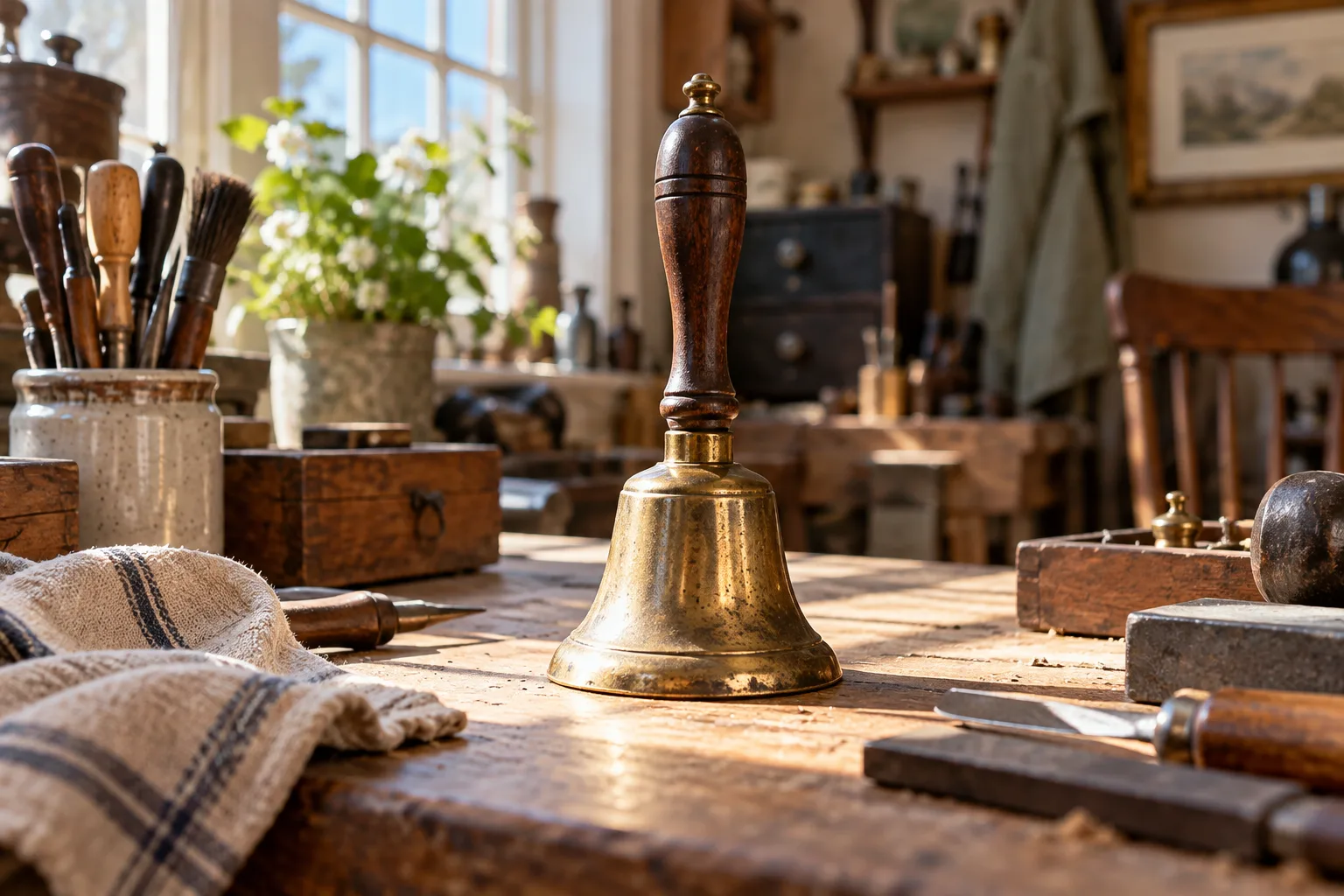
On the third day, she went inside just before noon. A brass handbell stood on the workbench beside a row of repaired clocks. She watched it carefully. At twelve, the familiar sound came from somewhere near the bench, but the handbell did not move. Its clapper was wrapped in felt, tied in place with a scrap of string.
Lena checked the clocks. None had a striking mechanism, and most were waiting for parts. She wondered whether a delivery driver was pressing the shop's doorbell, but nobody stood outside the locked front door. When she opened it herself, the old mechanical bell above the frame made a rough, rattling sound quite unlike the two clear notes.
She wrote down the time and returned the next day with a notebook. This time, instead of watching the brass bell, she stood beside the dividing wall. The sound seemed louder there. On the wall, half-hidden by a calendar, was a small square grille that she had mistaken for a ventilation opening.
The wall had carried more than air
Lena moved the calendar and found two painted-over screw heads. She did not remove the grille; the workshop was not hers to dismantle. Instead she called Tomas and described it. He remembered a speaking tube that once connected the workshop to a storeroom across the courtyard. The buildings had belonged to one business long before the bakery arrived.
He had blocked the tube years earlier because cold air came through it. But a plumber had recently worked in the old storeroom, now rented by a flower seller named Noor. Perhaps the work had disturbed the covering at the other end. Tomas gave Lena permission to inspect the opening with Noor, and she crossed the courtyard after lunch.
Noor showed her a brass grille behind a shelf of ribbon. A loose wooden cap lay on the floor beneath it. Nearby sat a small electric door chime, installed so she could hear customers entering while she arranged flowers at the back. It made two clear notes. Lena recognized them immediately, though the question of the exact time remained.
Noor checked her order book. A restaurant collected a table arrangement every day at noon, and its driver used the rear entrance rather than the street door. The chime sat only a hand's width from the newly uncovered tube. The timing, at last, had an ordinary appointment behind it.
The bell that mattered was next door
The next morning, Lena and Noor tested their explanation. Lena stood inside the workshop while Noor opened the rear door of the flower shop. Two notes arrived through the wall, sharp enough to seem almost local. Then Noor covered the tube opening with its wooden cap and repeated the test. This time Lena heard only a faint sound from the courtyard.
They had found a route, a source, and a reason for the schedule. The brass handbell had contributed none of them. Its position on the bench had simply offered Lena an obvious object to blame. She thought back to how long she had watched its motionless handle while the useful clue waited behind the calendar.
With Tomas's agreement, they secured the old cap and moved the flower shop's chime away from the opening. Lena left a note explaining the arrangement, along with a sketch of the tube's path. On the following day, noon passed quietly inside the workshop. Outside, the restaurant driver collected the flowers, and the bakery served its usual line of customers.
When Tomas returned, he unwrapped the handbell's clapper. It belonged to a retired teacher who wanted it repaired for a family gathering. He rang it once to test the repair: a single lower note, quite different from the mysterious pair. Lena laughed. The bell she had investigated for a week had finally made its first sound.