Three claims on one scarf
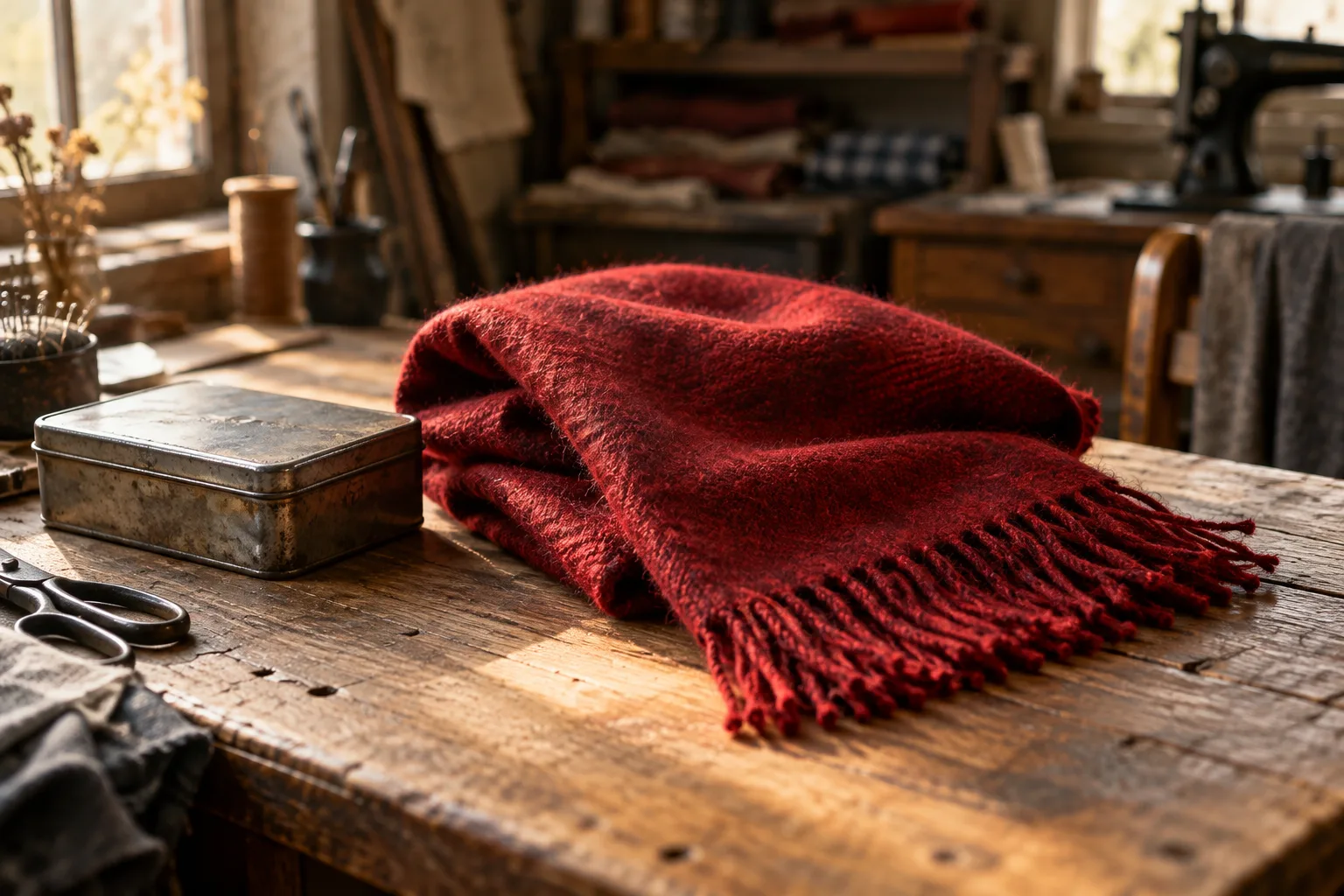
Mara found the red scarf in the repair shop’s oldest drawer, wrapped around a tin of mismatched buttons. A paper tag read “Return when finished,” but there was no name, date, or description of the repair. Her father had retired the week before and left her careful records for everything except the drawer he called the someday drawer.
She put a small notice in the window asking the owner to describe the item. By lunchtime, three people had done so. A retired bus driver remembered a red scarf with a dark darn near one end. A gardener described its crooked fringe. A woman who ran the evening art class said that one corner carried a tiny blue stitch.
All three details were present. None of the visitors seemed interested in arguing, which made the problem stranger. Each said the scarf had belonged to someone else before them, and each was certain it ought to be returned. Mara asked them to come back on Saturday while she checked the shop’s records. She gave no one the scarf.
That evening her father answered the telephone from his new flat. He remembered the item immediately but could not recall its final owner. He had repaired it more than once, always without charge. “There was a reason for that,” he said. “Look inside the button tin.” Mara had already searched it for a receipt. This time she emptied it completely and noticed a folded strip of paper beneath the removable tray.
A record written in repairs
The strip listed six first names and six ordinary places: the bus shelter, the allotments, the evening classroom, and three addresses Mara did not recognize. Beside each entry was a small sketch of a repair. The dark darn, the fringe, and the blue stitch appeared in order. This was not a list of customers disputing ownership. It was a record of the scarf’s travels.
On Saturday the three visitors sat around the cutting table. The bus driver explained that he had given the scarf to a passenger waiting in bitter weather. She had later left it with the gardener, whose coat had been soaked during a burst pipe repair. The gardener passed it to the art teacher after an outdoor class ran late.
The scarf had become a practical favor that moved from person to person. Whenever it frayed, someone brought it to Mara’s father. He added a repair and noted the next stop, amused that the same piece of wool kept arriving with a different story. Nobody had agreed on a grand tradition. They had simply noticed someone who needed it more at that moment.
Only the last entry remained unexplained. It gave a first name, Nessa, and the address of a closed music shop. Mara assumed the trail ended there until the art teacher recognized the handwriting beside it. The note was her own, made when Nessa had lent her the scarf during a winter concert. She had never managed to give it back.
An owner, and a choice
Nessa still lived above the former music shop. When Mara visited, she opened the door wearing a bright yellow scarf and laughed at the sight of the red one. She had bought it years earlier, before any of the people at the cutting table had borrowed it. The blue stitch was hers too, a repair made while waiting for a delayed train.
Mara explained the competing claims and the list in the tin. Nessa listened without interrupting, then asked whether the scarf was finally mended. It was. Mara had secured the loose edge that her father had left unfinished when his hands grew too stiff for small work. The tag had been literal all along: return it when the repair was done.
Nessa thanked her and kept the scarf. She did not announce that it should belong to the town or that its history required another generous gesture. For the moment, she wanted a familiar thing back. Mara found that ending unexpectedly satisfying. A traveling object could have a useful history without losing the person who had first owned it.
A month later, Nessa brought a box of other scarves to the shop and asked whether Mara would mend them for a neighborhood clothing exchange. This time they wrote down the arrangement clearly. The red scarf stayed around Nessa’s neck while they sorted the box. Its journey had ended, but the habit it inspired could continue without anyone having to guess whose gift it was.