Do not move it after lunch
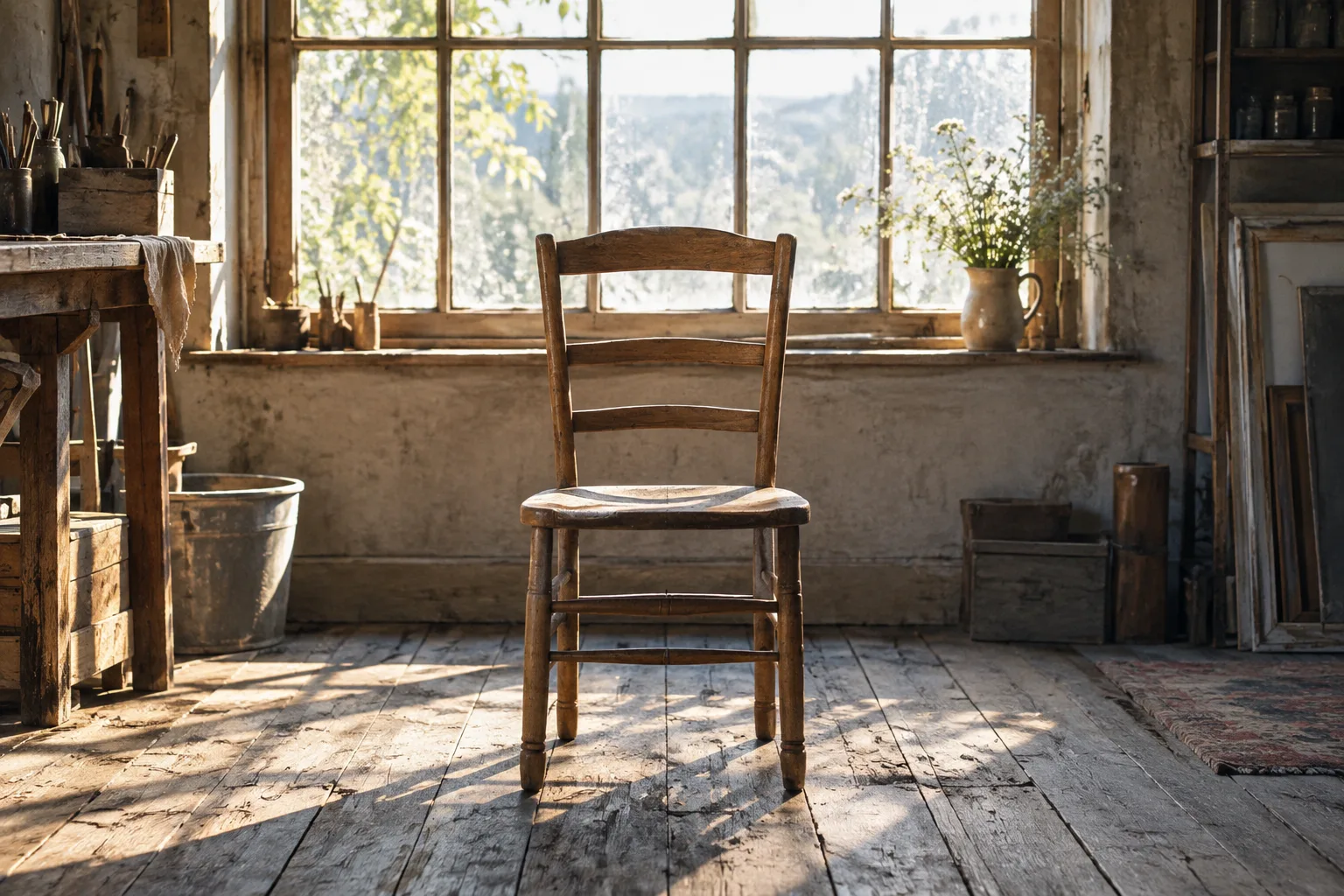
When the old sign painter’s workshop became a community room, every piece of furniture was carried out for cleaning except one chair. It stood beside the tall west window, angled toward a blank wall. A paper label tied beneath the seat said not to move it after lunch. There was no signature and no explanation.
Imogen, who was organizing the reopening, assumed the chair had sentimental value. She asked the painter’s son whether someone had always sat there. He remembered his father working alone, usually standing, and could not recall a regular visitor. The chair was ordinary beech, with a repaired back rail and a small green stain on one leg.
The room needed space for folding tables. Imogen photographed the chair’s position, untied the label, and moved it a short distance along the wall. Nothing happened. No hidden compartment appeared, and no mark on the floor outlined a forgotten doorway. She put the chair back before leaving, feeling slightly foolish for expecting the room to supply a clue.
The next afternoon, a volunteer found the chair facing the window instead. Everyone denied moving it. Imogen checked her photograph and noticed something she had missed: the original seat was not parallel to the wall. It pointed toward a pale rectangle just above the skirting board, where the paint had faded unevenly.
The visitor who brought no name
On Thursday, Imogen stayed through the afternoon to finish the exhibition labels. A little after three, a bright stripe crossed her page. Reflected light from an upper window opposite had entered the workshop and landed on the wall. As minutes passed, it reached the pale rectangle and spread across the chair’s worn wooden seat.
She called the painter’s son. He arrived with a box of notebooks and immediately moved the chair to face the window. He apologized: he had been the mysterious visitor the previous afternoon, letting himself in with an old key to check whether anything needed repair. He had turned it without thinking, just as his father used to.
Together they searched the notebooks. There were paint mixtures, dimensions, unpaid errands, and sketches of lettering. Near the back of one book was a page of small rectangles with dates beside them. Most were crossed out. One carried a note about a difficult blue that looked right in the morning and wrong by closing time.
The chair was not waiting for a person. That much seemed clear. But Imogen could not yet connect the rectangles to a seat, or understand why its position mattered only after lunch. The son examined the green stain again. This time he turned the chair over and found two shallow grooves beneath the front edge.
What the chair had been holding
The grooves matched a thin board in the box of workshop scraps. Set across the seat, it made a slightly sloping support. The painter’s son remembered carrying freshly painted samples there as a child. His father wanted to see how colors changed in the troublesome afternoon light before committing to a customer’s large sign.
The pale wall rectangle had been a reference panel, repainted often enough to age differently from the surrounding surface. The notebook dates recorded comparisons. The instruction under the seat kept helpers from tidying away the improvised stand during the part of the day when it was useful. An ordinary chair had doubled as a small testing station.
There was still one practical problem. The reflected stripe no longer followed exactly the route described in the old notebook, because the building opposite had acquired new windows. Imogen decided against arranging a daily demonstration that might promise an effect the weather or season would not deliver. She photographed the light they had actually observed and dated the image.
For the reopening, the chair stayed beside the window with the sample board resting across it. Its label explained the discovery without inventing a lonely visitor. The painter’s son brought three unfinished color cards for people to compare in different parts of the room. A seat that had seemed reserved for someone absent became an invitation to notice what was present.