Dune detective
Read a landscape that wind keeps rearranging.
Before you jump in
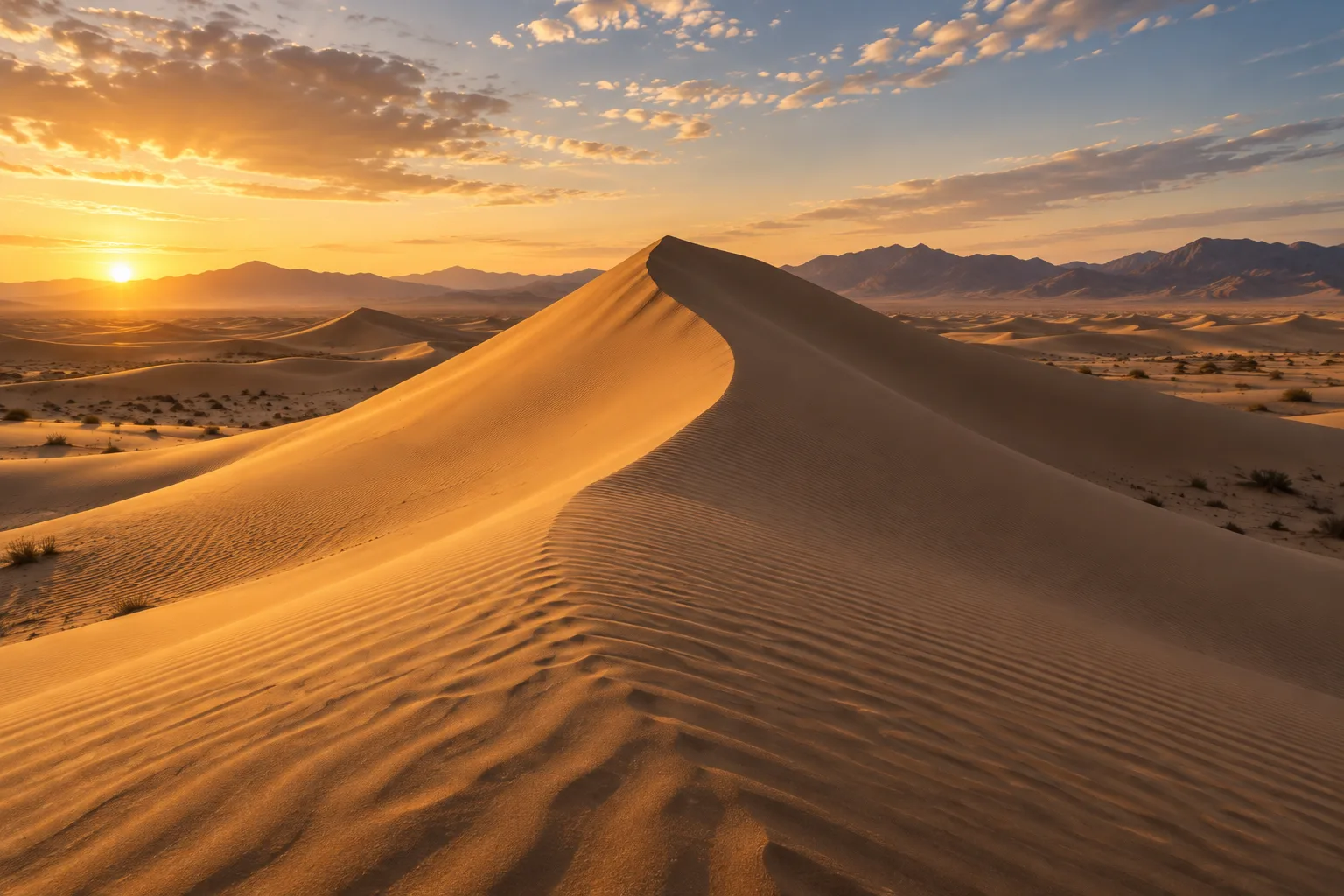
A dune can look like a solid hill until a gust lifts grains from its crest. Its smooth outline hides a landscape assembled from countless small movements. Some dunes curve into crescents, others grow several arms, and plants can change the pattern in surprising ways. This quiz asks you to look at the shape and then work backward toward the processes that could produce it.
Begin with the materials and forces involved, then compare clues from slopes, vegetation, and wind direction. Later questions move beyond the dune itself to the larger system supplying its sand. You do not need to recognize a particular desert from a photograph or remember a height record. The useful skill is distinguishing an observation from an explanation, and recognizing that a familiar outline can be maintained even while its individual grains continue to move.
What you’ll explore
- Wind transport and dune slopes
- Vegetation and dune shapes
- Sand sources and landscape change
Connect dune features with wind and sediment processes without treating every dune alike.
Which agent mainly builds an ordinary sand dune by transporting and depositing grains?
This is the opening question. Start the round to see the choices and test your answer.