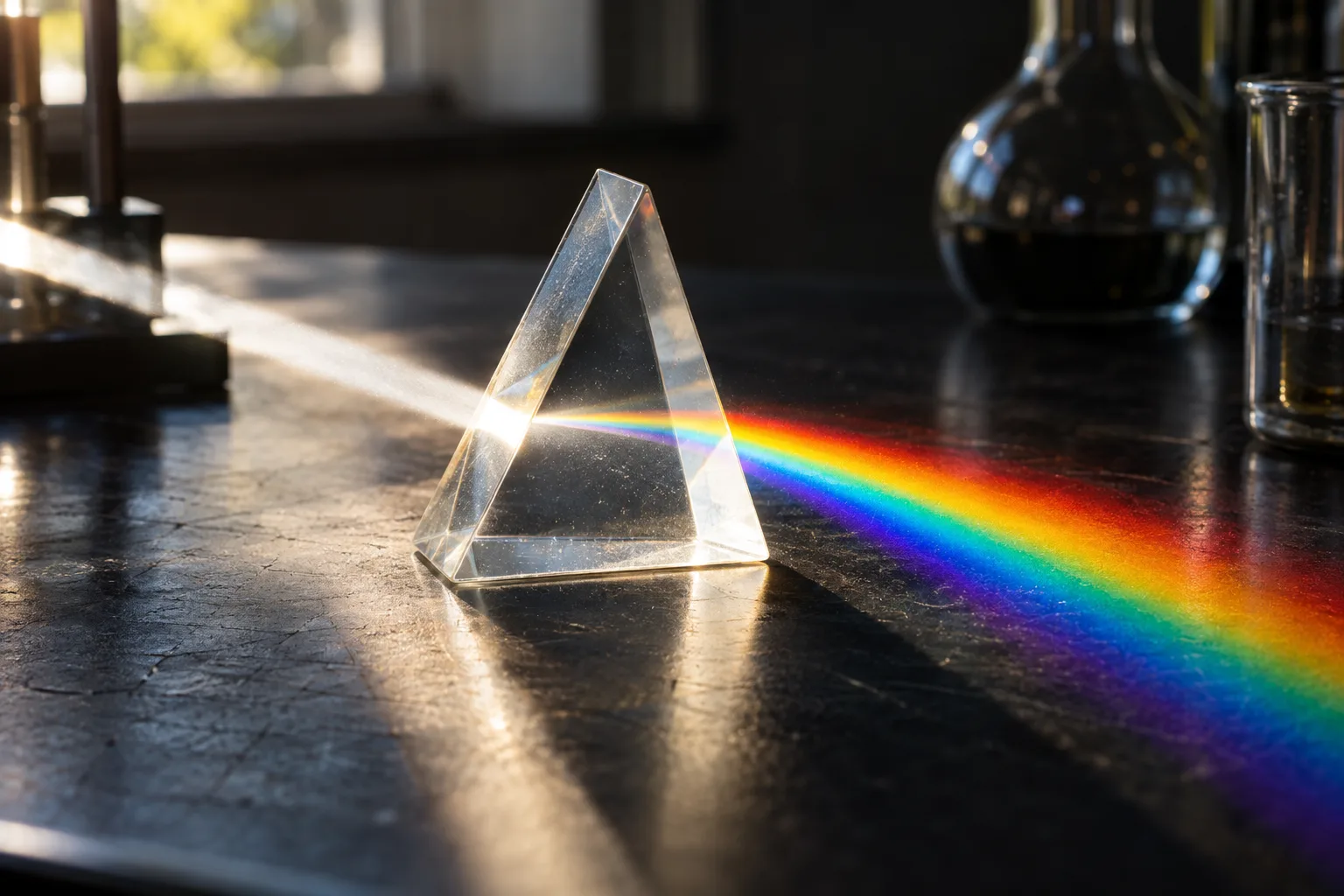
Light and color lab
A window, a prism, and a few surprisingly useful distinctions.
Before you jump in
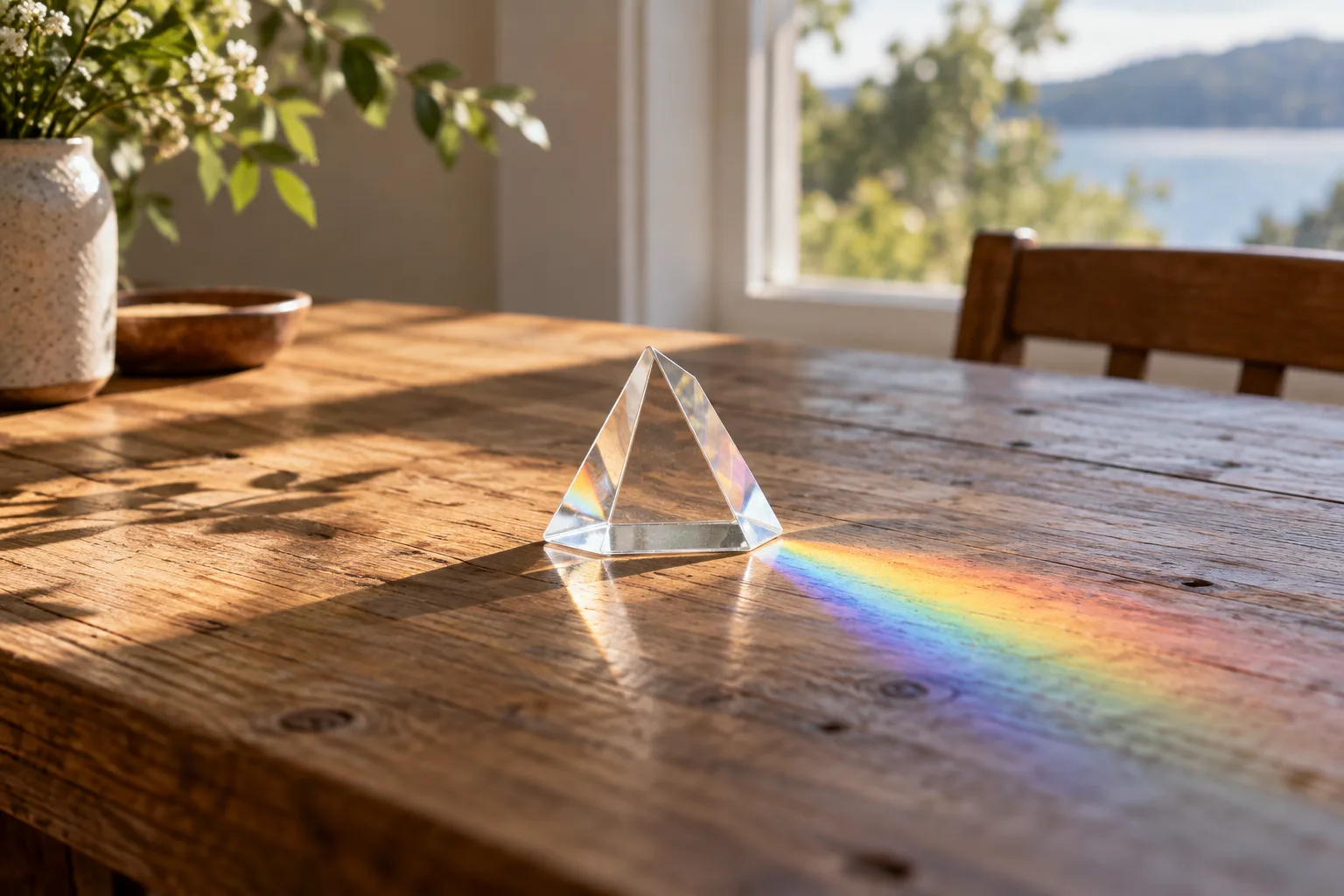
A stripe of color on a wall can begin with ordinary sunlight and a piece of glass. A mirror sends a view back toward you, while a window lets you see through it. These familiar experiences belong to a connected set of ideas about light, materials, and what our eyes detect. The challenge is to tell those ideas apart when several happen at once.
Work from everyday observations toward the relationships between wavelength, frequency, and photon energy. Along the way, you will consider what a prism changes, what visible light leaves out, and why an object’s appearance depends on its illumination. There are no numerical calculations to rush through. Read each situation carefully and choose the process that matches the evidence. By the end, a simple colored patch should look less like a trick and more like a clue about the light reaching your eye.
What you’ll explore
- Reflection, transmission, and refraction
- Visible and invisible wavelengths
- Frequency and photon energy
Explain a color observation by separating the source, the material, and the light reaching the eye.
Light bounces off a mirror toward your eyes. What is this process?
This is the opening question. Start the round to see the choices and test your answer.