Magnet lab
A few small objects, a surprisingly large set of ideas.
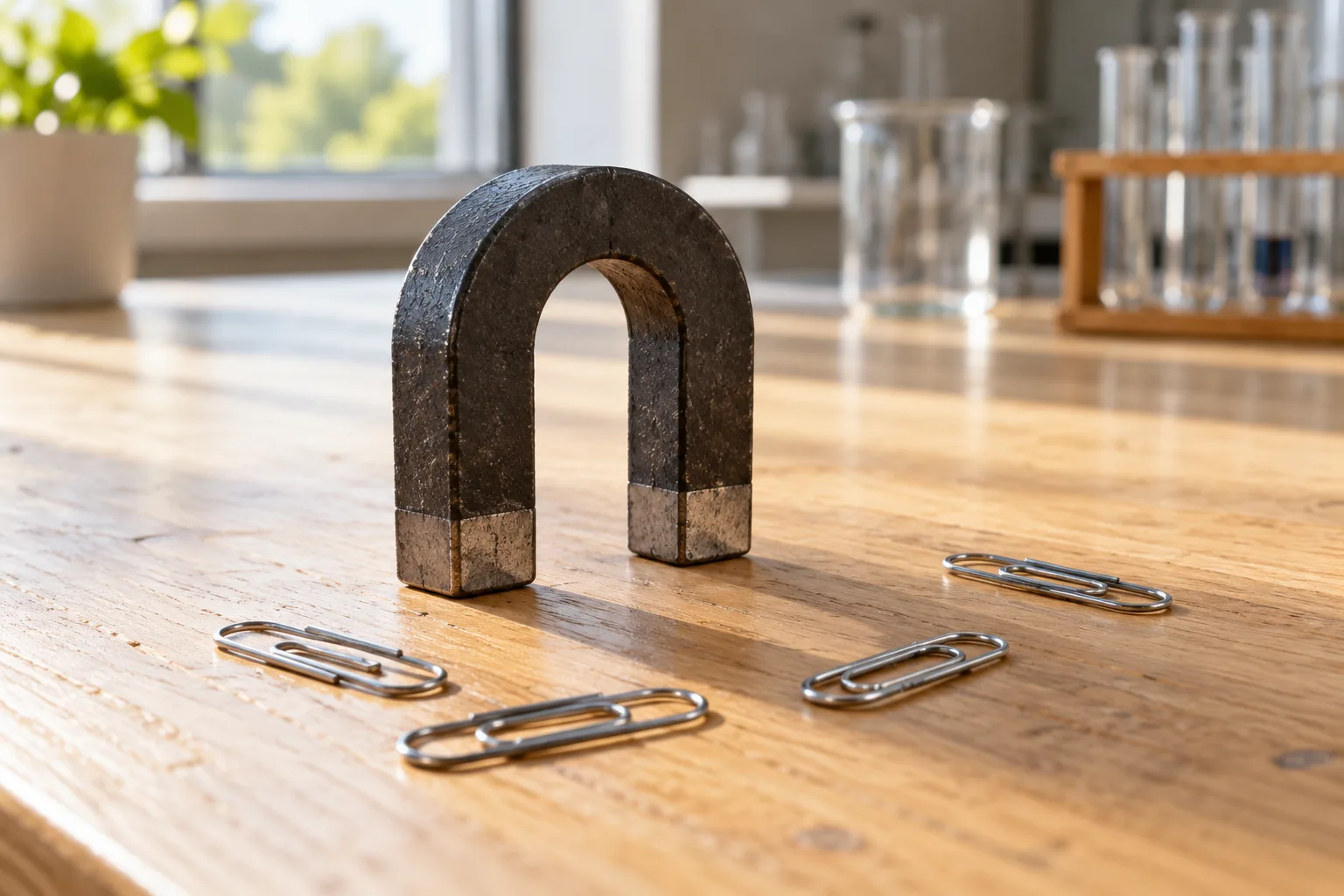
Before you jump in
A magnet can move something before the two objects touch, which makes an ordinary desk a good place to start asking physical questions. Turn one magnet around, bring a compass nearby, or compare different materials, and the outcome changes. The interesting part is deciding which change matters. This quiz uses familiar objects to explore the invisible interactions behind those small but revealing movements.
The opening questions establish the language of poles and fields. Later questions connect magnetism with electricity, motion, and the design of a fair comparison. You do not need equations, specialist equipment, or knowledge of a particular brand of magnet. Read each setup carefully, keep the conditions in mind, and avoid assuming that every shiny object behaves alike. By the final question, the challenge is less about naming an object and more about choosing evidence that can support a useful conclusion.
What you’ll explore
- Magnetic poles and materials
- Fields and compasses
- Electricity, motion, and fair tests
Use magnetic-field ideas to explain simple observations and design a controlled comparison.
What usually happens when the north poles of two ordinary bar magnets face one another?
This is the opening question. Start the round to see the choices and test your answer.