Penguin adaptations
Follow a bird from the ice into the sea.
Before you jump in
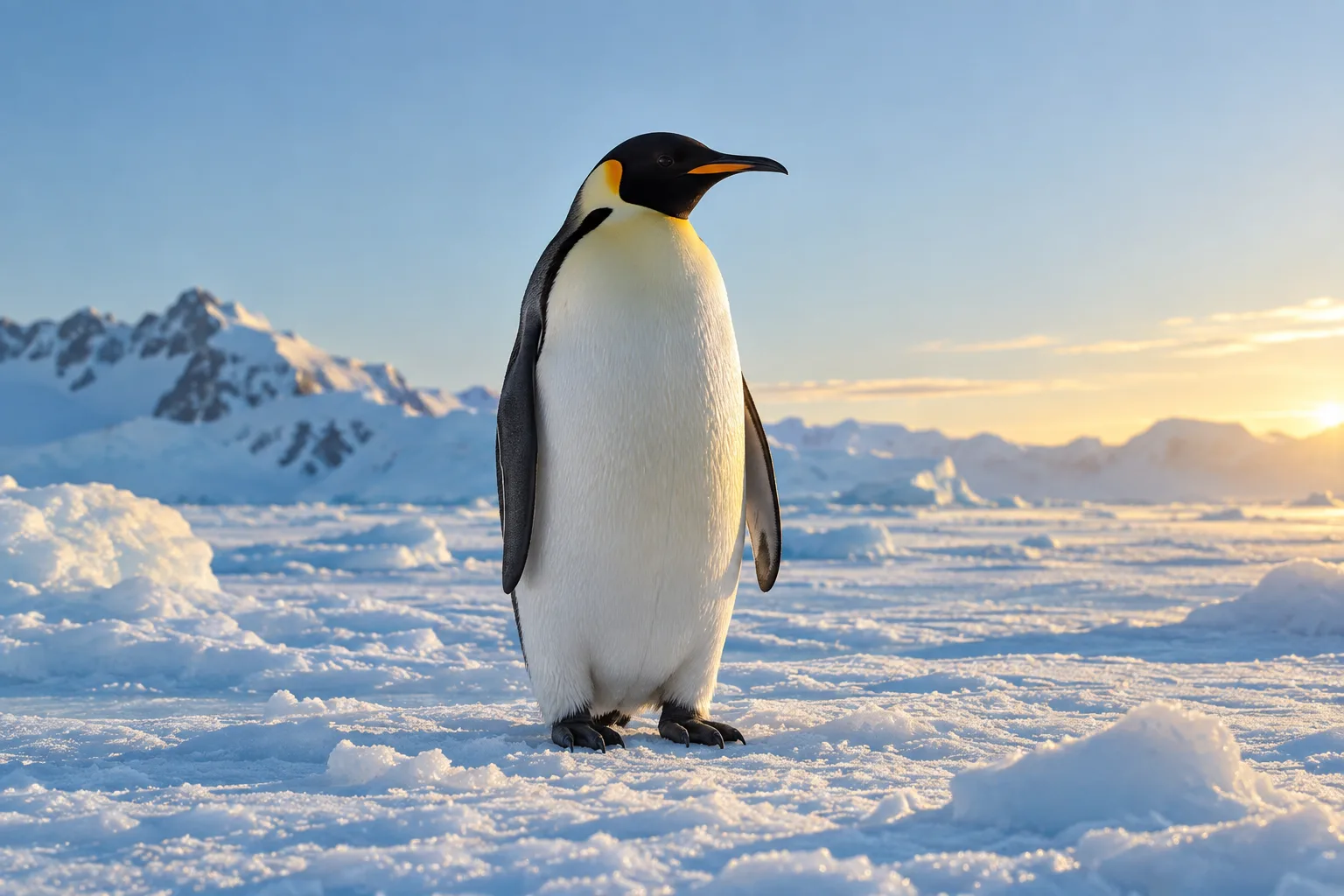
A penguin standing on the ice can look awkward until it enters the water. Suddenly the same body seems perfectly at home. That change of scene is a useful starting point for understanding adaptation: a feature has to be considered alongside the conditions in which it works. This quiz begins with the familiar outline of a penguin, then looks more closely at movement, insulation, and the demands of raising a chick.
The later questions focus on emperor penguins, whose breeding cycle brings together ice, cold, food, and timing. You will distinguish a body feature from a behavior and consider why an adult and a young chick do not face identical challenges. There are no speed records or population estimates to memorize. Instead, follow the connections between a bird’s structure, its surroundings, and what it needs to do next.
What you’ll explore
- Swimming and feather coverings
- Emperor penguin breeding
- Heat conservation and chick development
Explain how penguin structures and behaviors meet different demands on land and at sea.
Which group of animals do penguins belong to?
This is the opening question. Start the round to see the choices and test your answer.