Roman aqueduct engineering
Look beyond the famous arches.
Before you jump in
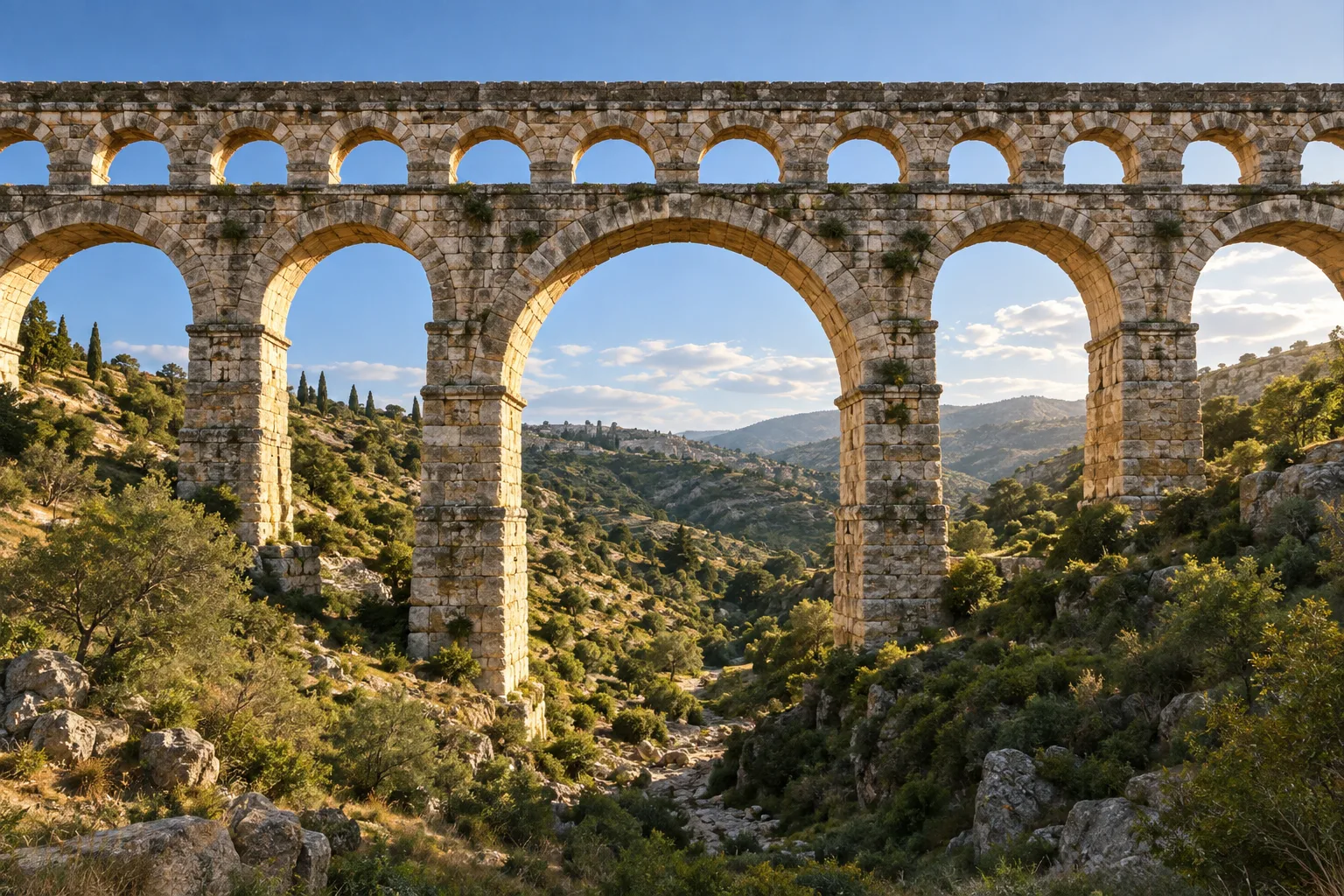
The most recognizable image of a Roman aqueduct is a line of stone arches crossing a landscape. Yet that view shows only part of a much longer journey. Water had to be collected, carried through changing terrain, and delivered where people could use it. This quiz follows the route rather than treating the impressive bridge as the whole system.
You will begin with the purpose of an aqueduct and the force behind a gently sloping channel, then examine real examples at Nîmes and Rome. Later questions ask you to interpret routes that disappear underground, structures that carry more than one channel, and layers added in later centuries. The goal is not to memorize disputed flow estimates or every emperor’s building program. It is to recognize the choices hidden inside a system whose most visible pieces can distract us from how it worked.
What you’ll explore
- Gravity and route planning
- The Pont du Gard and Nîmes
- Underground channels and reused structures
Explain why aqueduct bridges are only one part of a larger water-delivery system.
What was the primary purpose of a Roman water-supply aqueduct?
This is the opening question. Start the round to see the choices and test your answer.