A donation without an instrument
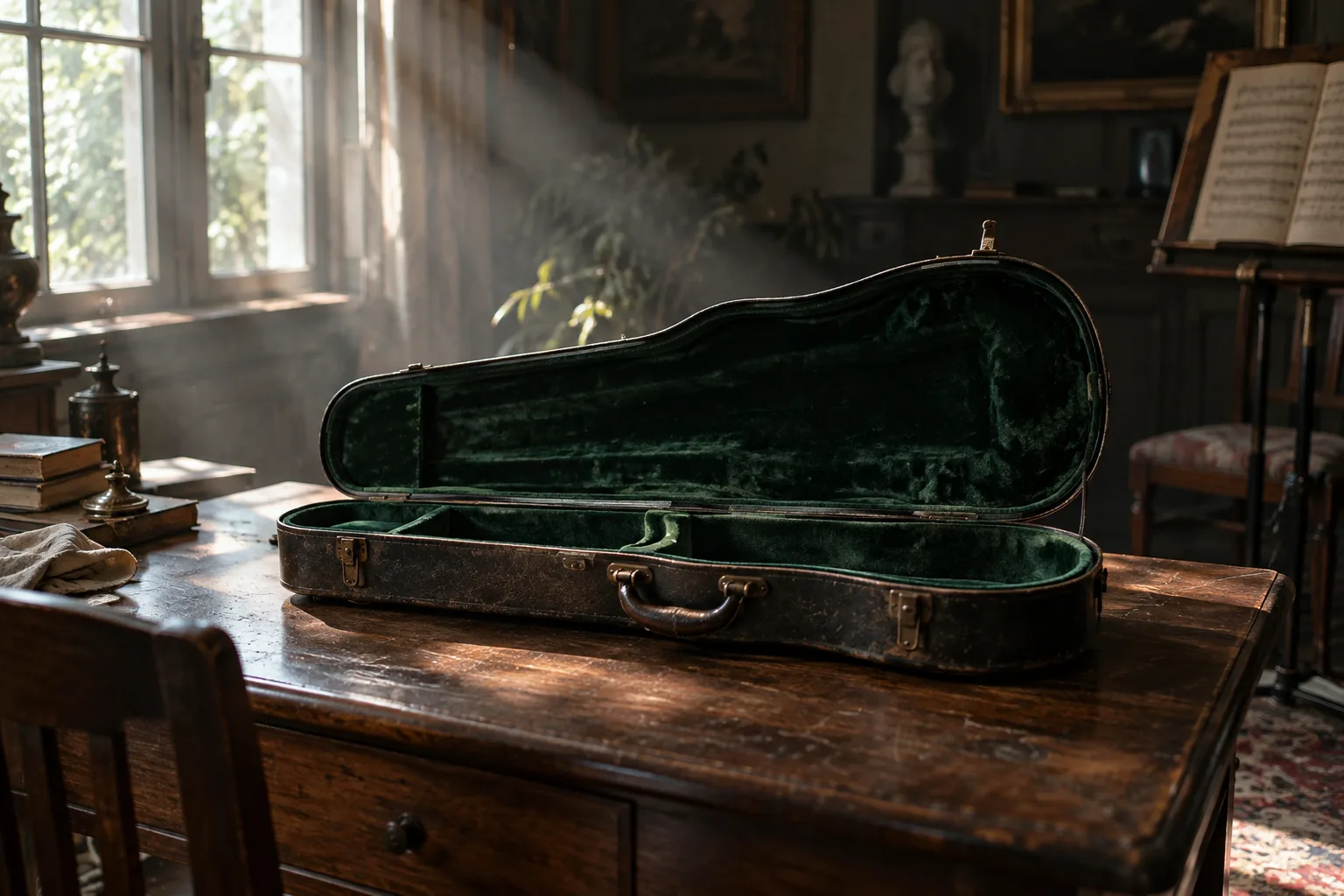
When June opened the case delivered to the Wren Street music room, she found only the impression of a violin in green velvet. The parcel's note was brief: for the Saturday players, from Elsie. There was no return address. June knew three Elsies, none of whom had mentioned an instrument, and the music room had no money for an expensive mistake.
Her first thought was that a violin had been removed in transit. The brass catches looked worn but undamaged. Beneath the handle, a square of faded tape carried the remains of a blue star. June photographed the case and asked the volunteers whether anyone recognized it. Most remembered a similar case from childhood. Only Arun, who tuned the room's donated piano, recognized the star.
It had belonged to his older sister, he said. She had marked everything with blue stars during the summer their family moved away. Her name was Mira, not Elsie, and she had sold the violin years earlier to pay for a train ticket. Arun's voice became careful when he said he had not heard her play since.
June reached into the compartment where a bow would normally rest. A corner of the velvet lifted beneath her finger, revealing an uneven line of green stitches. The stitches looked homemade. Arun leaned closer and recognized something more personal than the star: his sister had always repaired things with the largest needle she could find.
The second part
They opened the loose seam with a small pair of scissors and found a narrow envelope tucked between the lining and the shell. Inside were two pages of handwritten music. The first carried Mira's name. The second was labeled for Arun, with an impatient note asking him to stop changing the ending. He laughed before he could prevent it.
The pages belonged to a duet they had written as teenagers. Arun remembered the disagreement with embarrassing clarity. Mira wanted the last phrase to remain unresolved; he wanted a grand finish that would make the neighbors applaud. On the day she left, they had argued over the music instead of saying that they would miss each other. He had spent years remembering the argument as if it were the important part.
June looked again at the parcel note. The paper had been cut from the back of a concert program, leaving half a telephone number beneath a fold. Arun recognized the venue and found its public listing. The manager remembered Elsie, a retired music teacher who had recently donated old teaching materials. With Elsie's permission, he passed along her number.
Elsie explained that she had bought the empty case at a secondhand shop and used it for spare strings. When the lining came loose, she noticed the envelope but left it in place. She thought the community music room might find a use for both. No missing violin, then, and no carefully arranged message from Mira. The case had arrived by ordinary chance. What happened next would have to be Arun's choice.
An ending left open
Arun still had his sister's number. That fact made the years of silence seem suddenly less like a locked door and more like a door he had stopped trying. He sent a photograph of the duet and asked whether she remembered the ending. Her reply arrived while June was stacking chairs: which one, mine or the ridiculous one you kept adding?
They spoke that evening. Mira had kept playing borrowed instruments after selling her own, but never that duet. She remembered Arun as the brother who could make any tune sound cheerful, and had assumed he no longer wanted to hear from the sister who left. Neither memory was entirely fair. For once, they allowed the conversation to become awkward without turning it into another argument.
On Saturday, Mira arrived with a borrowed violin. Arun sat at the donated piano, and June placed the old case on a side table with its repaired pocket open. They played the duet twice. The first time, Arun supplied his grand ending out of habit. The second time, he stopped where Mira's original page stopped and let the final phrase hang in the room.
No one applauded immediately. The silence was gentle enough that both of them smiled. Later, June wrote Elsie a thank-you note explaining that the case had found its purpose. She did not say it had reunited a family by magic. It had carried two pieces of paper safely through the years. Two people had finally decided to read them.