An ending left open
Arun still had his sister's number. That fact made the years of silence seem suddenly less like a locked door and more like a door he had stopped trying. He sent a photograph of the duet and asked whether she remembered the ending. Her reply arrived while June was stacking chairs: which one, mine or the ridiculous one you kept adding?
They spoke that evening. Mira had kept playing borrowed instruments after selling her own, but never that duet. She remembered Arun as the brother who could make any tune sound cheerful, and had assumed he no longer wanted to hear from the sister who left. Neither memory was entirely fair. For once, they allowed the conversation to become awkward without turning it into another argument.
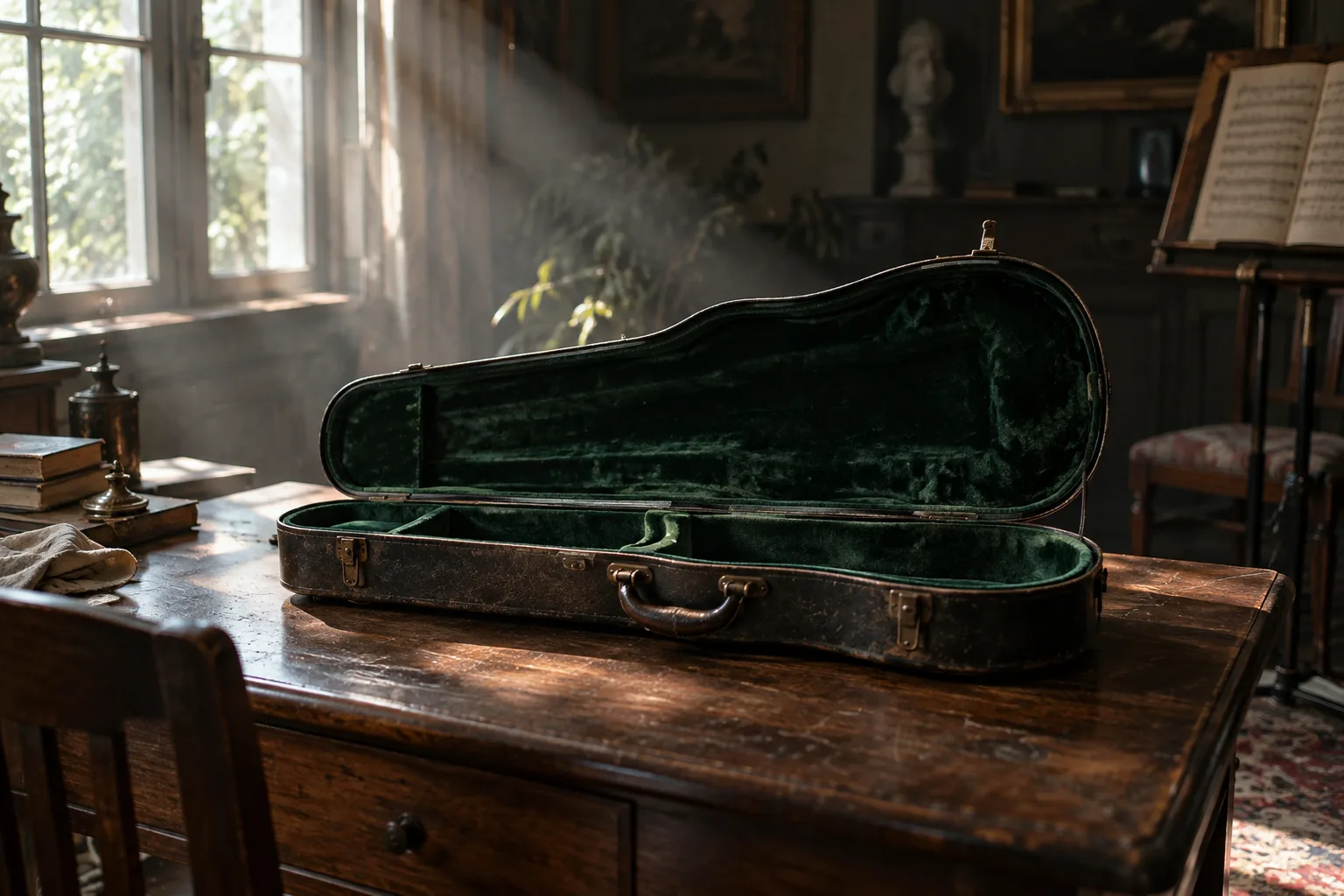
On Saturday, Mira arrived with a borrowed violin. Arun sat at the donated piano, and June placed the old case on a side table with its repaired pocket open. They played the duet twice. The first time, Arun supplied his grand ending out of habit. The second time, he stopped where Mira's original page stopped and let the final phrase hang in the room.
No one applauded immediately. The silence was gentle enough that both of them smiled. Later, June wrote Elsie a thank-you note explaining that the case had found its purpose. She did not say it had reunited a family by magic. It had carried two pieces of paper safely through the years. Two people had finally decided to read them.