Eleven minutes
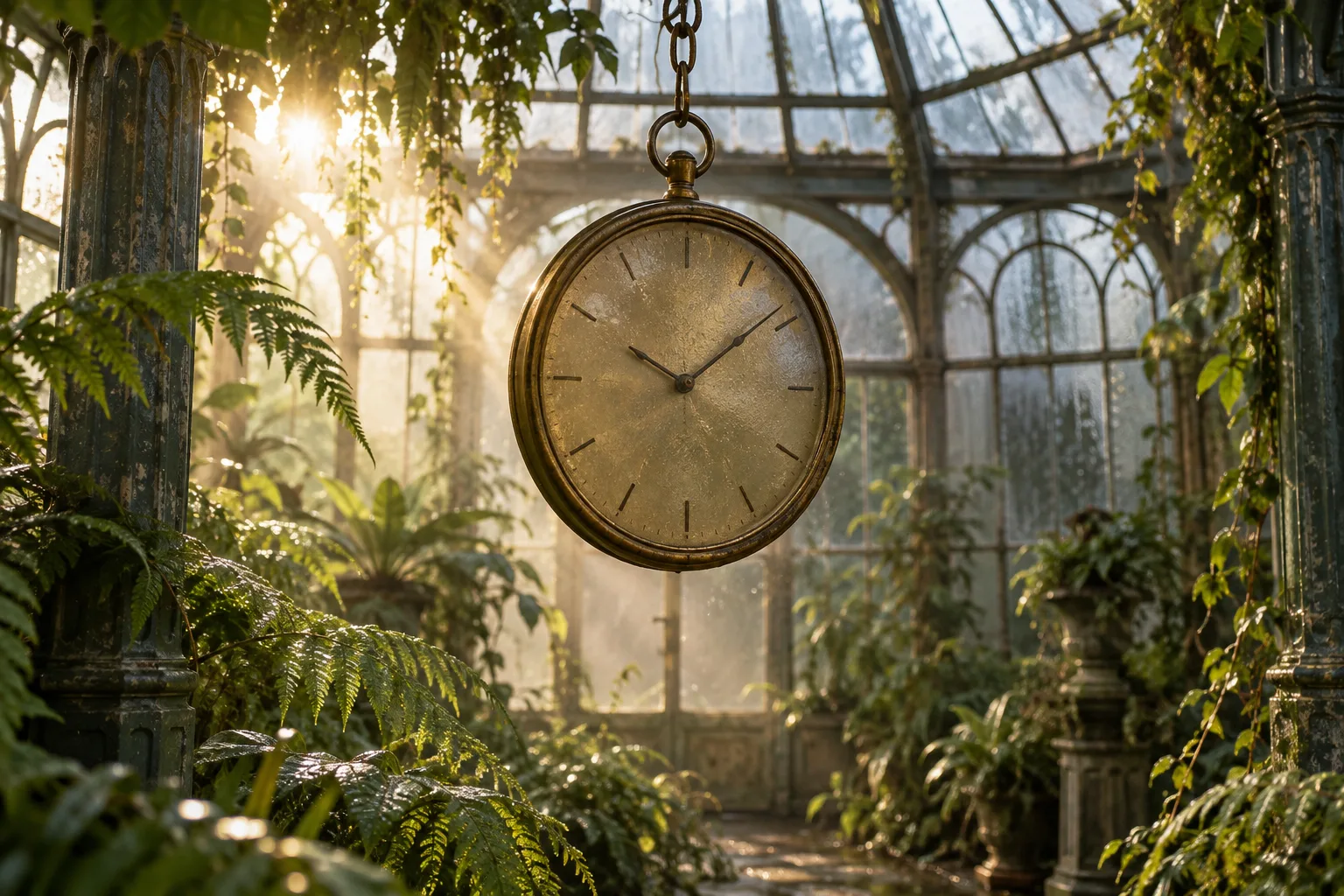
On her first morning as caretaker of Bellweather House, Mara set the greenhouse clock by her phone. By the next morning, it was eleven minutes late. She corrected it again. On Thursday it was late by exactly the same amount. The old mechanism, recently serviced and polished, ticked with the self-confidence of something that had never made a mistake in its life.
The house was preparing to reopen as a community garden. Mara's instructions were practical: clear the paths, label the tools, and find the planting notebook that the former gardener, Ada Vale, had promised to leave. Ada had moved to live near her daughter and could not return before opening day. Her last letter offered one maddening clue: everything important was still where they used to sit.
Mara tried the obvious places. There was no notebook beneath the potting stool, inside the wicker chair, or behind the low bench near the ferns. When she dragged that bench toward the door to sweep, its foot caught a loose tile. Beneath the tile lay a narrow brass key, clean enough to suggest it had been handled recently.
At that moment the side door opened. Tomas, the retired groundskeeper, paused with a watering can in his hand. His eyes went first to the key, then to the clock. Mara asked whether he had been adjusting the time. He answered too quickly: the clock had always run late. Yet the serviced clock had kept perfect time all afternoon, and Mara had begun to suspect that its mistake belonged to someone else.
The place they used to sit
Mara did not accuse Tomas. Instead, she asked him to help return the bench to its old position. He aligned it with a pale rectangle on the floor and nudged its left leg a few centimeters. When she asked why that mattered, he said Ada liked to see the clock without turning her head. Then he put down his watering can and admitted that he had moved the hands each morning.
For years, Tomas explained, Ada had taken her break at what the greenhouse clock called ten. His work in the orchard usually kept him until eleven minutes past. Rather than shorten her break, she had quietly put the clock back. It became their small arrangement: the greenhouse kept its own time. After she left, resetting the clock felt less like a trick than putting a chair back where it belonged.
The confession explained the hands but not the key. Tomas remembered a locked compartment beneath Ada's writing desk in the house. Mara fetched the desk from storage, slid the brass key into its narrow lock, and found the compartment empty except for a folded drawing. It showed the greenhouse from above, with the bench, the door, and a little square behind the clock.
On the reverse, Ada had written that a good plan needed room for people as well as plants. Tomas smiled at the sentence, then looked unsettled. He had kept the clock's habit alive so carefully that he had never thought to look behind it. Mara carried the drawing back through the garden while he followed, suddenly much less certain that he knew the place by heart.
Room for one more chair
They lifted the clock from its hook together. A shallow recess in the brickwork held a flat tin, and inside was the missing notebook. Its first pages contained ordinary planting records: dates, varieties, small failures, changes worth trying. Farther in, the neat columns gave way to a plan for the community garden. Ada had sketched wide paths, reachable beds, and a sheltered table large enough for a group.
The last page was addressed to Tomas. She had hidden the book there because he checked the clock every morning, and she expected him to notice the corner of the tin. Instead, a fern had grown across it. Her message asked him to teach the first gardening class. Beneath that invitation, she had drawn two chairs and left space for several more.
Tomas read the page twice. He had imagined the reopened house needing younger people with new ideas, while he would remain useful only for watering and remembering where things had been. Ada's plan gave his knowledge a place in what came next. Mara said the table could fit beside the bench if they cleared the unused pots. This time, he was the one who suggested moving it.
On opening day the clock showed the correct time. Under it hung a small handwritten schedule: tea at eleven minutes past ten. Tomas welcomed the first volunteers and explained why. Mara placed Ada's notebook on the new table, open to a blank page. The mystery had begun with someone trying to keep a moment from changing. It ended with enough chairs for that moment to become something larger.