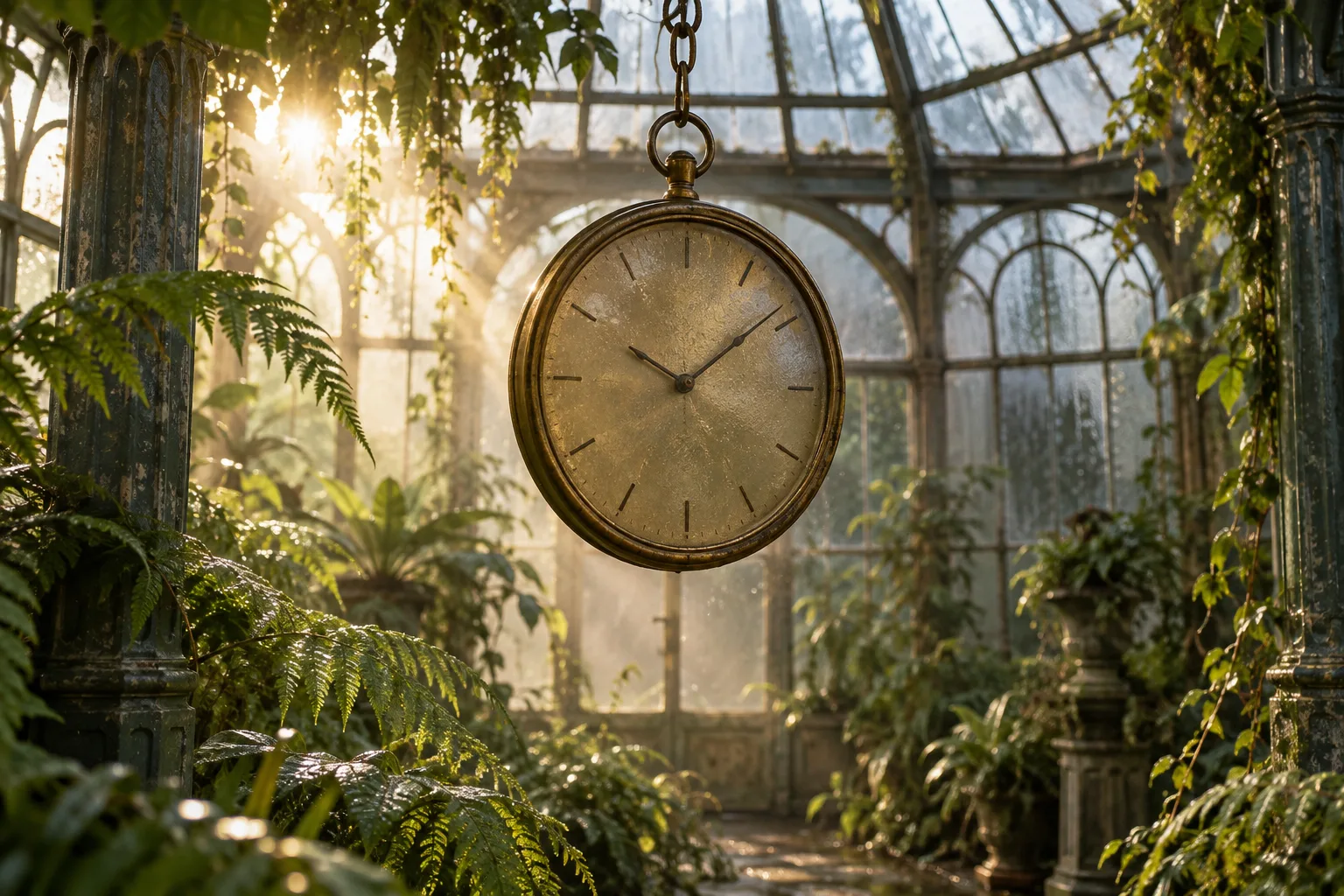
The place they used to sit
Mara did not accuse Tomas. Instead, she asked him to help return the bench to its old position. He aligned it with a pale rectangle on the floor and nudged its left leg a few centimeters. When she asked why that mattered, he said Ada liked to see the clock without turning her head. Then he put down his watering can and admitted that he had moved the hands each morning.
For years, Tomas explained, Ada had taken her break at what the greenhouse clock called ten. His work in the orchard usually kept him until eleven minutes past. Rather than shorten her break, she had quietly put the clock back. It became their small arrangement: the greenhouse kept its own time. After she left, resetting the clock felt less like a trick than putting a chair back where it belonged.
The confession explained the hands but not the key. Tomas remembered a locked compartment beneath Ada's writing desk in the house. Mara fetched the desk from storage, slid the brass key into its narrow lock, and found the compartment empty except for a folded drawing. It showed the greenhouse from above, with the bench, the door, and a little square behind the clock.
On the reverse, Ada had written that a good plan needed room for people as well as plants. Tomas smiled at the sentence, then looked unsettled. He had kept the clock's habit alive so carefully that he had never thought to look behind it. Mara carried the drawing back through the garden while he followed, suddenly much less certain that he knew the place by heart.