Inside a limestone cave
From a drop of water to an underground landscape.
Before you jump in
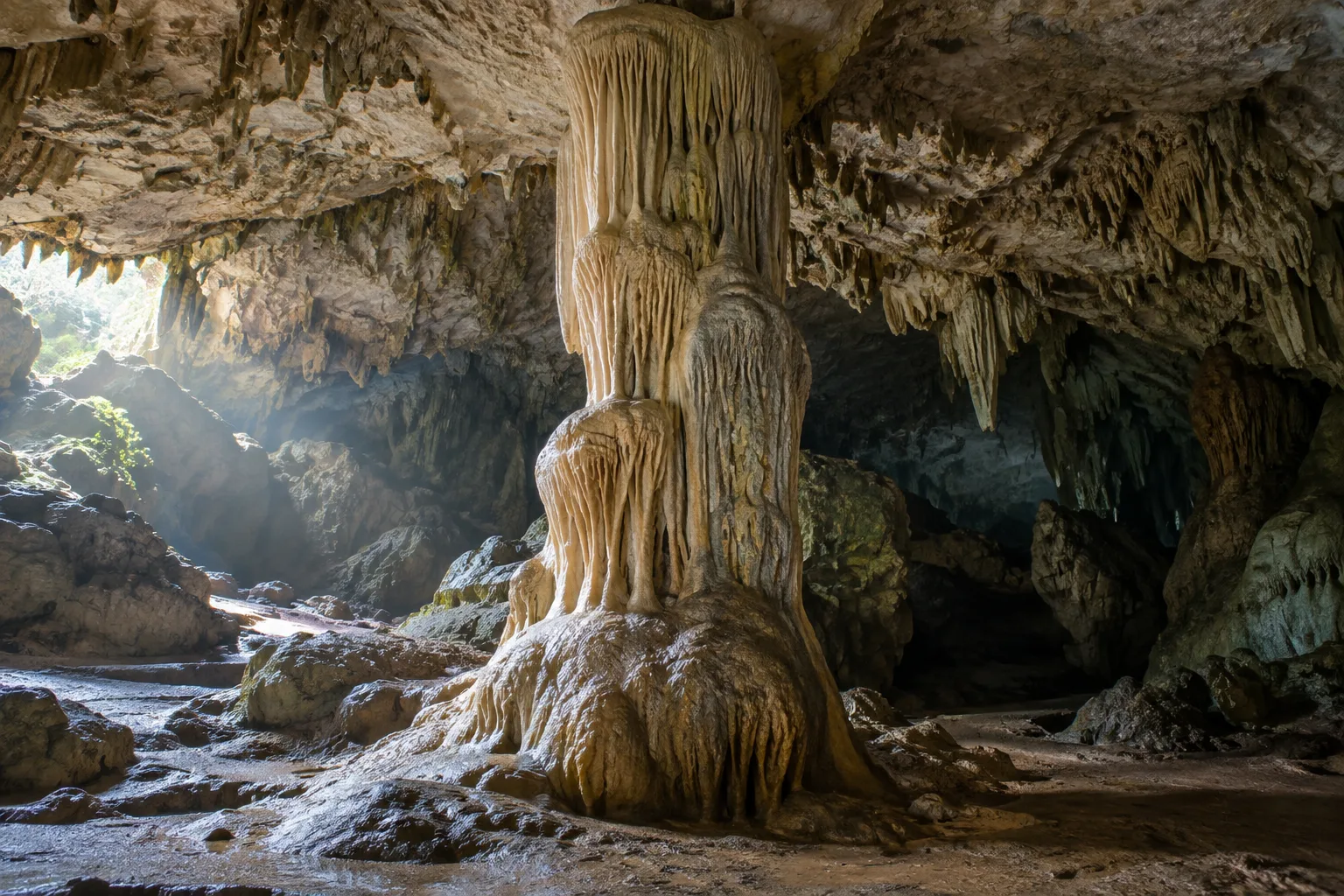
Step into the idea of a limestone cave and the first things you notice may be shapes: a pointed ceiling, a rounded mound, a wall that resembles a frozen waterfall. Those shapes invite nicknames, but they also preserve clues about water and rock. This quiz begins with the familiar features before asking how a space underground becomes decorated.
You will follow a simple chemical story, compare places where mineral deposits grow, and consider why a formation's size does not tell its whole history. The questions stay focused on limestone caves and their mineral features, rather than assuming every cave on Earth forms in the same way. No expedition experience is needed. Look for the connection between a process and the shape it leaves, and keep an eye on what a single observation can and cannot establish.
What you’ll explore
- Limestone dissolution
- Stalactites, stalagmites, and flowstone
- Mineral deposition and variable growth
Explain how water can both open a limestone cave and build formations inside it.
A stalactite grows from which part of a cave?
This is the opening question. Start the round to see the choices and test your answer.