A better way to ask
Nessa had been one of Eva’s students. She remembered the bakery rolls arriving in the same bags they later used for sewing practice, and had imagined that leaving a sample would be a charming way to revive the arrangement. She had not realized how many people had worked at the bakery since then, or that Lina’s father remembered the food order but never saw the lessons.
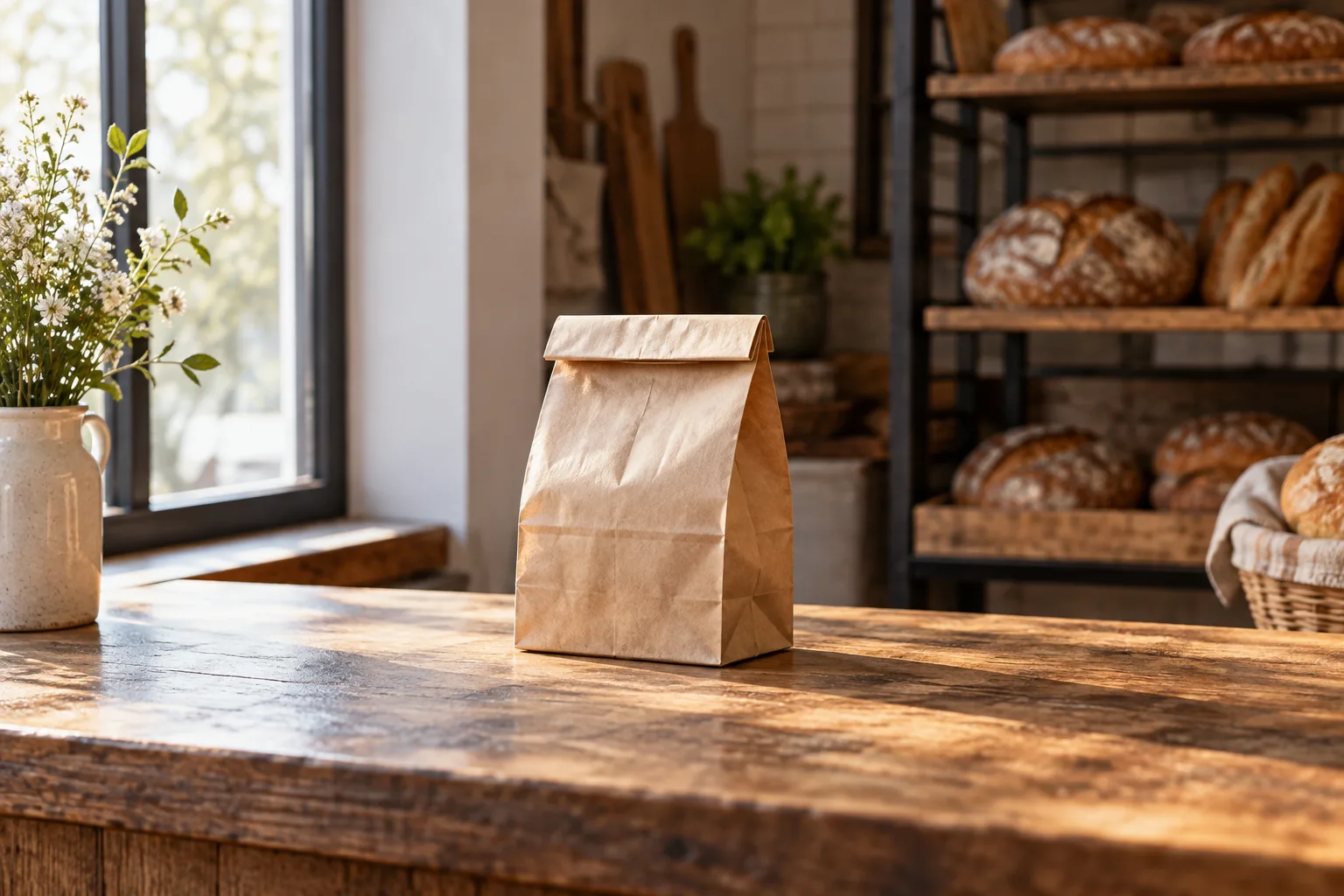
The empty bags were a request without enough context. Nessa apologized for leaving them during delivery hours and showed Lina the class plan. She wanted to buy simple rolls for the first session and wondered whether the bakery had spare clean paper for practice. She had been nervous about asking for a favor before anyone in the courtyard knew her.
Lina proposed two separate orders: food in fresh bags, and unused packaging offcuts for the craft table. Her father agreed to bake the small plain rolls again for the opening class. Nessa wrote down the quantities, collection time, and her phone number. The practical details felt less mysterious than pinholes, but considerably kinder to everyone trying to understand them.
On Friday the counter held a full bag with a clear name on it. Later, Lina visited the studio and found children carefully making their first stitches through paper. Nessa had framed one of the old blue-patched bags beside Eva’s photograph. Its purpose was finally visible: not a secret code, but the memory of someone who made a difficult skill feel possible.