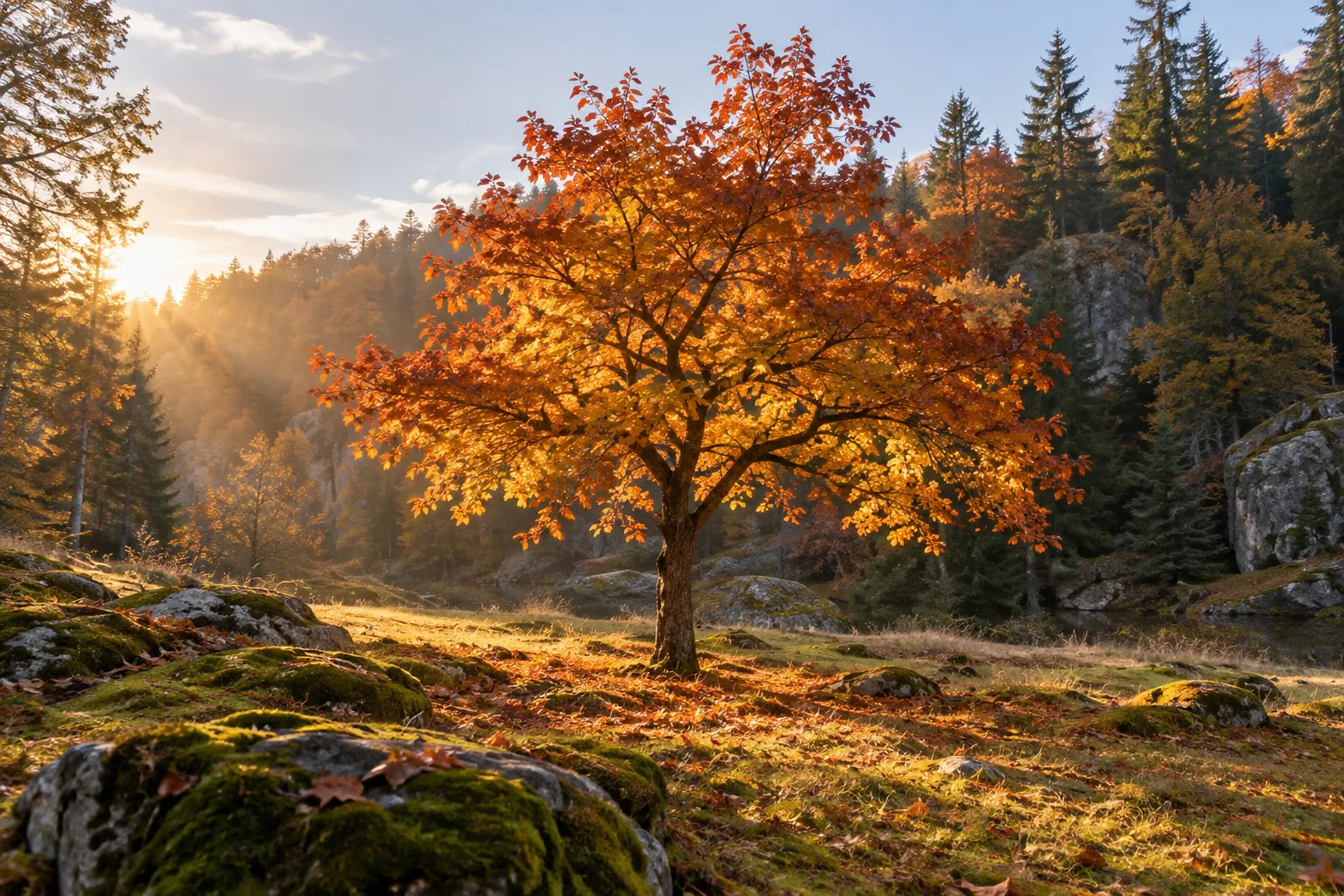
A season is not an appointment
People understandably ask when autumn color will peak. The Blue Ridge Parkway's NPS guidance explains why there is no simple formula for an exact date at a particular location. Plant genetics and environmental conditions interact, and a landscape with different elevations and species does not change all at once. A regional tendency is useful without being a promise about one overlook.
This also changes what it means to watch the season closely. A single bright tree does not establish that every surrounding tree is at the same stage. A dull-looking morning may reflect the light as well as the leaves. Those are reasons to compare observations carefully, rather than forcing a complicated landscape into one label such as early, late, or finished.
The process continues beyond the colorful photograph. NPS describes trees recovering nutrients from leaves before they fall. That seasonal transition connects the visible display with the tree's ongoing life. The leaf is not merely an ornament that becomes irrelevant when its green color fades; it has been part of a living system throughout the change.
The satisfying answer to why leaves change is therefore a set of connected answers. Pigments differ, their balance changes, and trees respond to both seasonal signals and local conditions. Once you know that, the unevenness becomes part of the interest. The branch that seems out of step with its neighbors is another chance to look more closely.
All 3 chapters
Sources & further reading
Checked . Explanation and commentary are original; factual claims draw on these primary sources.