The number in the inventory
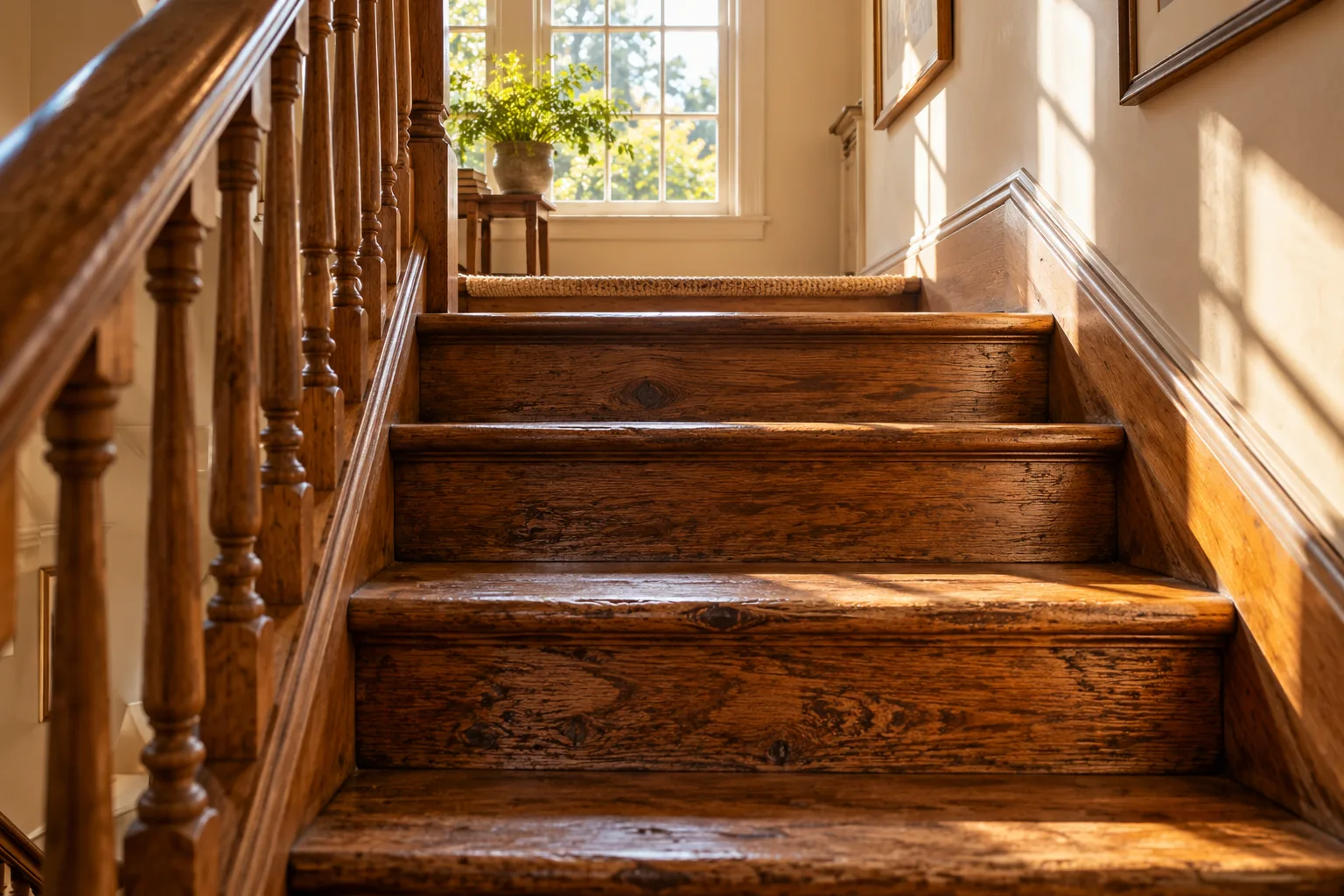
The carpenter’s invoice was the first thing June found in the house that did not agree with the house itself. It listed fourteen oak stair treads, each cut to the same width. June counted thirteen. She counted again from the bottom, then from the landing, trying to decide whether the landing itself could be the missing piece.
She was preparing the small house for her mother to move into. The paperwork came from a folder left by the previous owner, a careful man whose receipts were sorted by room. The invoice was dated long after the house had been built and carried a pencil note: “One held aside.” June assumed there must be a replacement board somewhere.
The obvious places produced nothing. The shed held garden tools, the cellar held paint tins, and the space beneath the stairs contained only a vacuum cleaner and a narrow cupboard. Inside that cupboard she found a second pencil note, this one written directly on the plaster: “Ask before changing the last one.” It sounded like a warning, but there was no name.
June called the retired carpenter whose number appeared on the invoice. His daughter answered and said he no longer took jobs, but he might remember the house. When he came to the phone, he asked an unexpected question. Was there still a small bench in the back garden? June looked through the kitchen window. There was, partly hidden behind a large terracotta pot.
The board that went outside
The bench was narrower than most garden seats and unusually heavy. June moved the pot and saw that its top was made from a single oak board, worn smooth along the front edge. It was exactly the width of a stair tread. Beneath it, protected from the rain, the carpenter had penciled the same job number as the invoice.
He explained that the previous owner had asked for an extra tread when the staircase was repaired. His wife had once used a small landing seat to rest while moving between floors. After they rearranged the house so she could live downstairs, she missed the view from the upper window. He wanted to make her another place to pause.
The carpenter had built the bench from the spare board and placed it where the garden opened toward the same distant ridge. The invoice listed the wood together because it was bought together. There had never been a fourteenth step on the staircase. June’s tidy accounting mystery seemed solved, except for the message inside the cupboard.
When she asked about it, the carpenter paused. He had not written that note. The final stair tread had been left in place during the repair because it was sound, and the owner had specifically asked them to preserve it. June returned to the staircase and looked closely at the lowest board. On its underside, just visible from the cupboard, were several short pencil marks.
A place to pause
The marks were measurements, but they did not record the height of children. Each had a small date and the name of a different dog. June photographed them and sent the image to the previous owner’s daughter, whose contact details were in the sale paperwork. The reply arrived that evening, accompanied by a photograph of a small terrier beside the staircase.
Her parents had fostered older dogs. Her father measured their shoulders at the lowest step because it was the only place the animals reliably stood still while waiting for a walk. The note in the cupboard was a reminder to future repairers that the board held a record. It was affectionate, practical, and much less ominous than June had imagined.
June offered to send the family a clear set of photographs. The daughter accepted and said there was no need to preserve the staircase forever for their sake. If a board needed replacing, it should be replaced. June appreciated the permission to care for the house without turning every old mark into an obligation. She left the sound tread where it was.
On moving day, her mother chose the little garden bench for their first cup of tea. June told her about the invoice, the ridge, and the patient dogs. The spare step had never been missing. It had become a seat, a change of purpose that the paperwork could record only as an extra piece of wood. From the bench, the ridge was still visible between the trees.