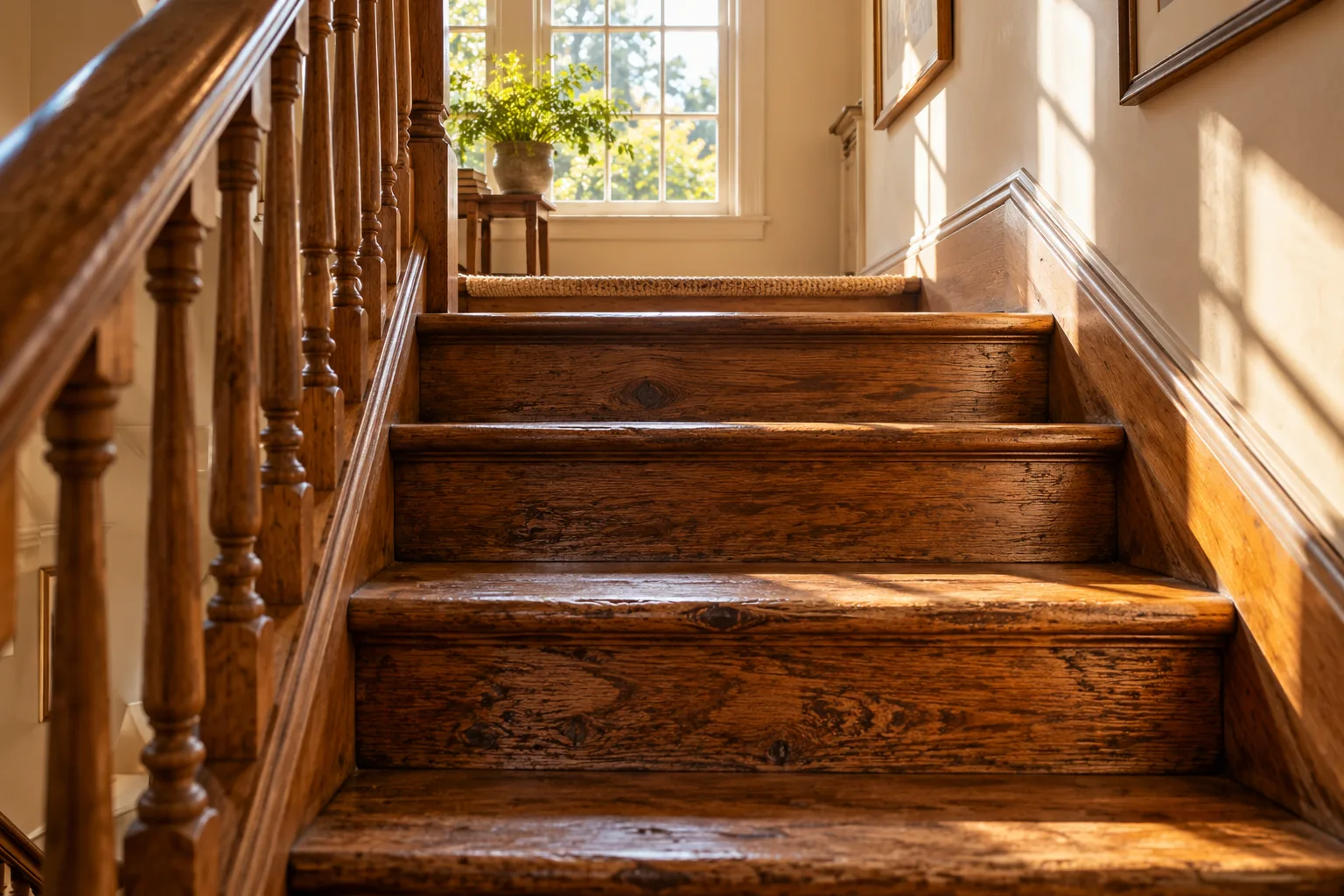
The board that went outside
The bench was narrower than most garden seats and unusually heavy. June moved the pot and saw that its top was made from a single oak board, worn smooth along the front edge. It was exactly the width of a stair tread. Beneath it, protected from the rain, the carpenter had penciled the same job number as the invoice.
He explained that the previous owner had asked for an extra tread when the staircase was repaired. His wife had once used a small landing seat to rest while moving between floors. After they rearranged the house so she could live downstairs, she missed the view from the upper window. He wanted to make her another place to pause.
The carpenter had built the bench from the spare board and placed it where the garden opened toward the same distant ridge. The invoice listed the wood together because it was bought together. There had never been a fourteenth step on the staircase. June’s tidy accounting mystery seemed solved, except for the message inside the cupboard.
When she asked about it, the carpenter paused. He had not written that note. The final stair tread had been left in place during the repair because it was sound, and the owner had specifically asked them to preserve it. June returned to the staircase and looked closely at the lowest board. On its underside, just visible from the cupboard, were several short pencil marks.