The number in the inventory
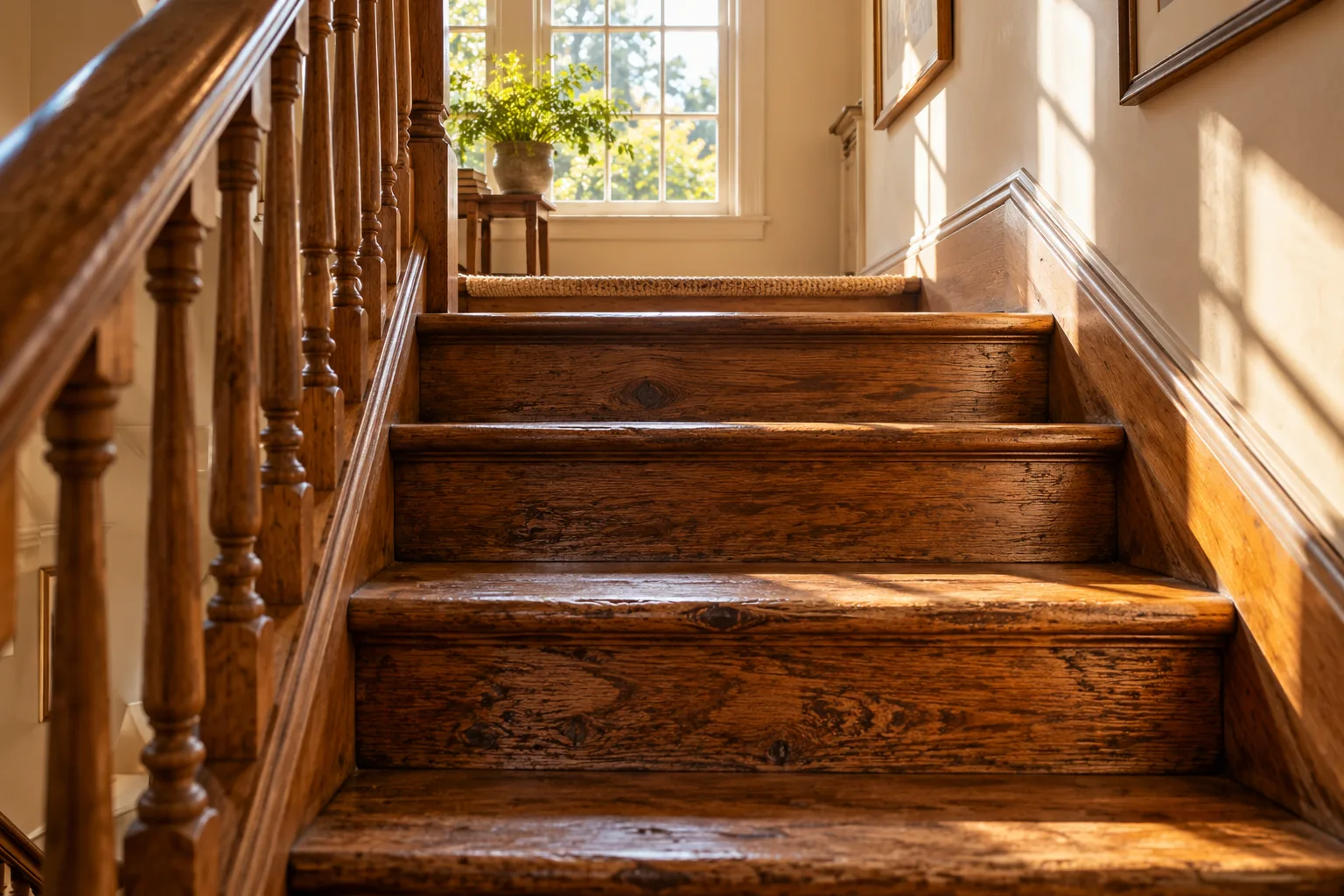
The carpenter’s invoice was the first thing June found in the house that did not agree with the house itself. It listed fourteen oak stair treads, each cut to the same width. June counted thirteen. She counted again from the bottom, then from the landing, trying to decide whether the landing itself could be the missing piece.
She was preparing the small house for her mother to move into. The paperwork came from a folder left by the previous owner, a careful man whose receipts were sorted by room. The invoice was dated long after the house had been built and carried a pencil note: “One held aside.” June assumed there must be a replacement board somewhere.
The obvious places produced nothing. The shed held garden tools, the cellar held paint tins, and the space beneath the stairs contained only a vacuum cleaner and a narrow cupboard. Inside that cupboard she found a second pencil note, this one written directly on the plaster: “Ask before changing the last one.” It sounded like a warning, but there was no name.
June called the retired carpenter whose number appeared on the invoice. His daughter answered and said he no longer took jobs, but he might remember the house. When he came to the phone, he asked an unexpected question. Was there still a small bench in the back garden? June looked through the kitchen window. There was, partly hidden behind a large terracotta pot.