The mountain is an accumulation
Ask someone to sketch a volcano and a steep triangle may appear almost immediately. It is a powerful visual shorthand: a mountain, an opening, perhaps a cloud. But a shorthand can quietly become a rule in our imagination. If we expect every volcano to fit that drawing, we can miss the broad slopes and less theatrical forms that belong to the same geological story.
The US Geological Survey describes volcanoes as being built from their own erupted materials. It also distinguishes magma, below the surface, from lava after eruption. Those definitions shift the emphasis from a mountain that happens to contain fire to a system that moves material and builds a landscape. The visible form is an outcome, something assembled through events, rather than a standard container waiting to be filled.
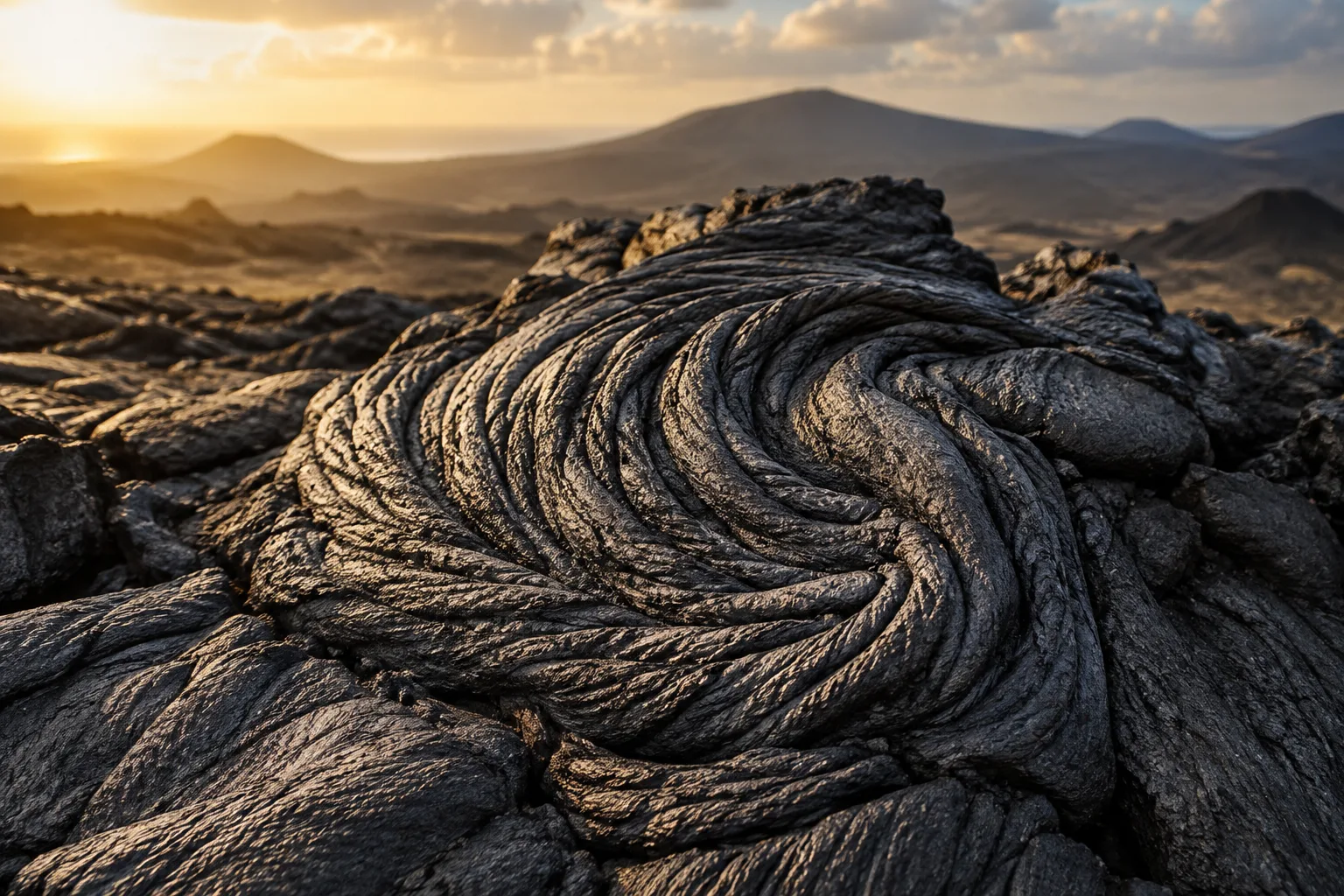
USGS descriptions of volcano types make the contrast concrete. Fluid lava flows spread widely to build the gentle profile of a shield volcano. Composite volcanoes, also called stratovolcanoes, combine layers of lava and fragmented erupted material into generally steeper forms. You do not need to memorize a catalog of names to find the idea useful. Imagine reading the silhouette as a question: what kinds of material could accumulate into that shape? The answer turns the outline into evidence. A mountain photograph becomes the beginning of an investigation rather than the whole explanation.
All 3 chapters
Sources & further reading
Checked . Explanation and commentary are original; factual claims draw on these primary sources.