A move before opening
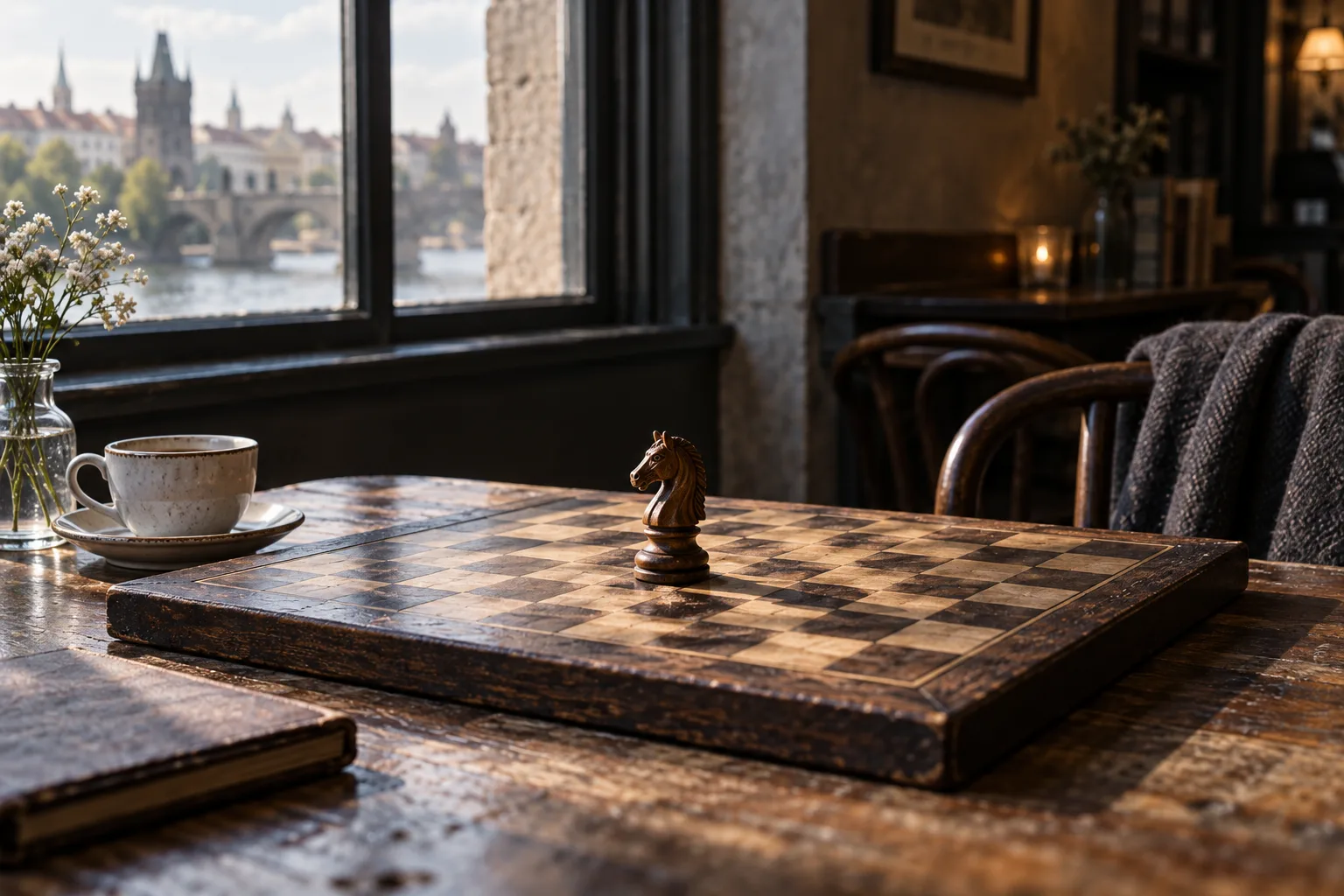
When Elian inherited the corner cafe, he kept his aunt’s chessboard on the window table. Most of the pieces were packed away, but one wooden knight remained. On Monday it stood near the center. On Tuesday it had moved two squares toward the window. By Friday, Elian had begun sketching its positions on the back of old receipts.
Only three people entered before him: the cleaner, the bread supplier, and his aunt’s friend Rosa, who watered the window plants. All three denied playing chess. Rosa added that his aunt had been terrible at it. Elian found this hard to reconcile with the worn board, whose pale squares were polished by years of use.
He tried treating the positions as a sequence of legal knight moves. The pattern failed immediately. He tried reading the squares as letters and numbers, but his aunt had never marked coordinates around the edge. Then he noticed that each new position lay beside a different shallow scratch. The knight was pointing to marks already there.
On Saturday he left a note beside the board: “I would like to understand.” The next morning the knight stayed where it was. Beside it sat a small envelope containing a strip of tracing paper, folded into quarters. Eight little circles were drawn on it, but there were no words. Whoever had started the puzzle seemed ready to provide another piece.