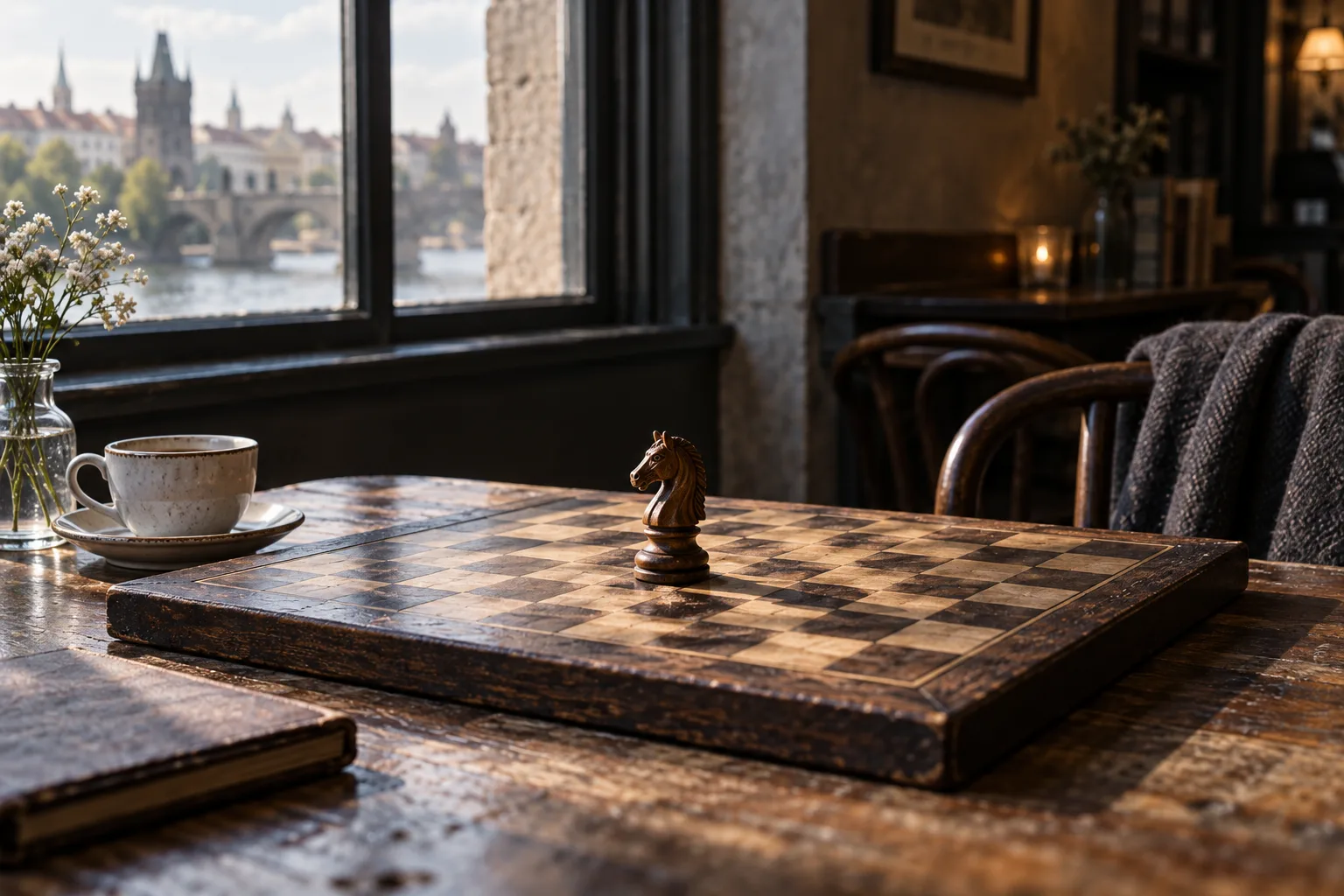
The board was a map
Elian unfolded the paper over the chessboard. The circles matched neither the corners nor the centers of its squares. They did, however, line up with the scratches if he turned the paper sideways. One circle was darker than the others. He lifted the board and examined its underside, expecting a compartment or a message. There was only his aunt’s name in pencil.
Rosa arrived while he was holding it up. This time she did not deny knowing about the knight. She said she had moved it, then looked embarrassed. His aunt had asked her to help Elian remember something, but Rosa had turned the request into a riddle because she thought it would make him curious. It had mostly made him suspicious of the bread supplier.
The tracing paper came from an old arrangement of tables. His aunt had used the chessboard to plan the cafe floor during a renovation, assigning one chair to each marked place. The dark circle was the window seat where Elian had done his schoolwork. He remembered the chair now: its short leg had made it rock whenever he reached for his drink.
Rosa explained that the knight was his aunt’s stand-in for him, because he was always moving in unexpected directions. The last marked position was outside the old seating arrangement. It pointed toward a narrow alcove that had been hidden behind a tall cupboard for as long as Elian could remember.