Start with a grain, not a mountain
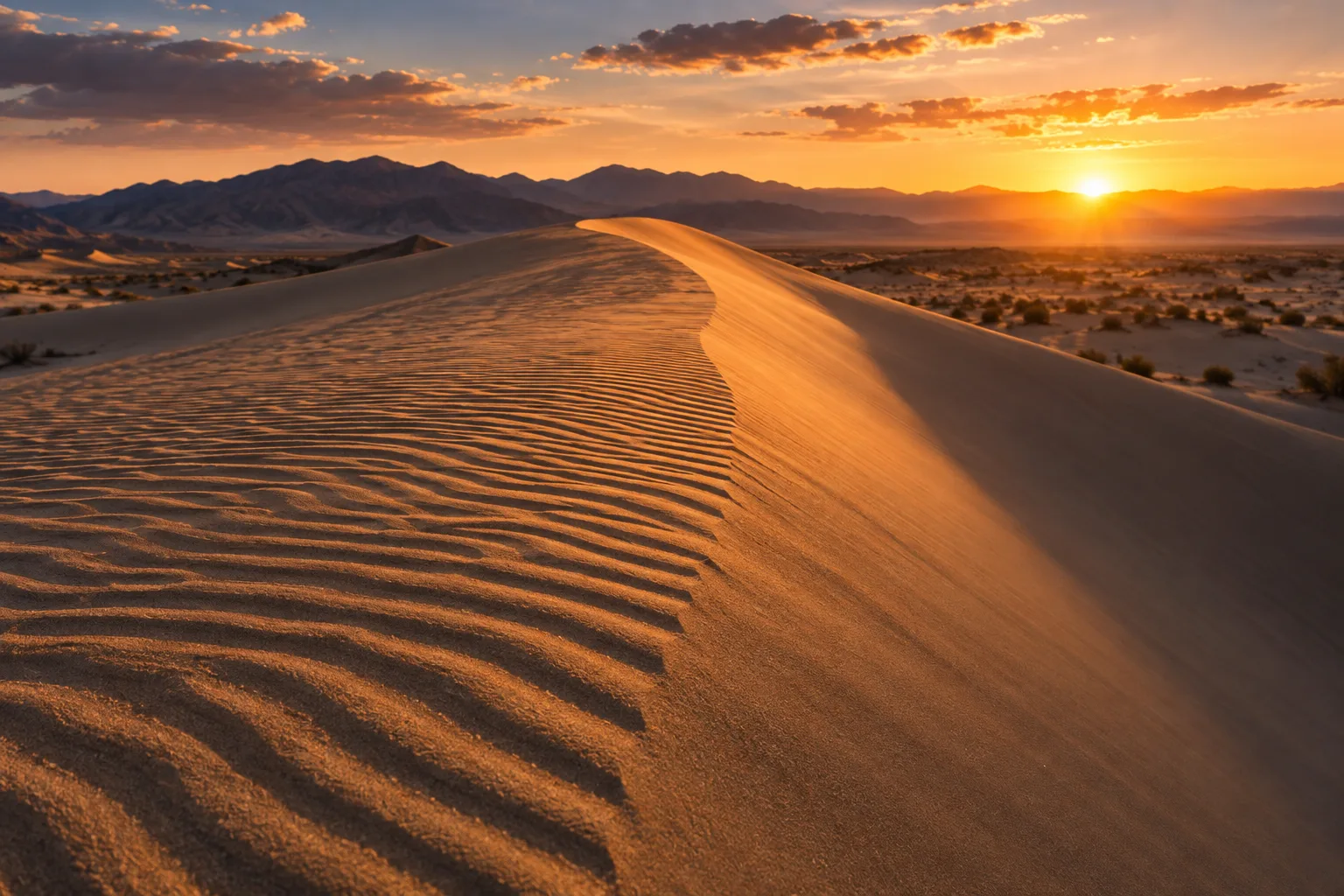
A sand dune invites the wrong comparison. Seen from far away, it resembles a small mountain: a slope, a summit, perhaps a ridge disappearing into the distance. But a dune is assembled from loose grains. Wind can remove material from one place and deposit it in another, so the shape is maintained through processes very different from those holding a rocky peak together.
The National Park Service describes many dunes as having a gentler slope facing the wind and a steeper sheltered side. That common profile provides a starting point for reading the landscape. It is not a universal stencil. Wind direction, available sediment, plants, and the surrounding terrain all influence what eventually takes shape.
At the scale of individual grains, one important movement is saltation: small hops along the surface. The Sleeping Bear Dunes explanation emphasizes this bouncing transport. A photograph of a smooth dune can hide that busy near-ground traffic, just as a distant view of a crowd hides the steps of individual people.
Even the word sand needs care. It describes grain size rather than one compulsory mineral. White Sands National Park provides a striking example: its pale dunes consist of gypsum sand. The color is part of a particular material history, not evidence that every dune is made of the same substance. Before explaining how a hill moves, it helps to ask what its grains are and how they arrived.
The landscape gives the wind something to work with
Wind does not manufacture an unlimited supply of suitable grains wherever it blows. NPS explains that other processes, including rivers, waves, and glaciers, can supply sediment that wind later transports. Dunes therefore belong to a larger landscape. Looking only at the crest can miss the sources that make the crest possible.
Colorado’s Great Sand Dunes offers a useful example of that connection. Water carried sediment into the surrounding valley, and wind moved available sand toward the mountain front. Seasonal creeks also transport sand around the edges of the dunefield, returning material toward the valley floor where wind can move it again. The system includes water even though its most recognizable feature looks dry.
Plants introduce another influence. Vegetation can slow the movement of sand and help hold parts of a dune in place. A shrub collecting sand around itself creates a different situation from an open surface where grains move with fewer obstacles. The plant is part of the process, rather than merely decoration added after the dune is finished.
This is why a useful explanation usually needs several observations together. A curved ridge may suggest a particular dune form, but nearby plants and the history of wind directions help explain it. The shape is an outcome. Reading backward from that outcome is possible, provided we do not pretend that one photograph supplies every missing detail about the setting.
A familiar silhouette can conceal change
The NPS account of Great Sand Dunes compares broad views taken long apart and notes how recognizable the large forms remain. It also describes measurements showing smaller ridges moving across those forms. There is no contradiction: the scale of the feature being compared changes what the observer can detect.
Think of a patterned bedspread being smoothed. Small folds can shift while the overall covered shape of the bed remains much the same. This is only an analogy for scale, not a physical model of a dune. It helps explain why a stable outline cannot prove that every grain underneath it stayed where it was.
Dune categories are also clues to a changing environment. Star dunes have several radiating ridges and develop with winds from multiple directions. Parabolic dunes can have plant-anchored arms and an advancing central nose. These examples show how a form records the interaction of forces and resistance, rather than a single momentary gust.
The satisfying answer to how a hill of loose sand persists is that persistence need not mean stillness. Material can circulate, smaller features can migrate, and the broad form can remain recognizable. Next time a dune looks perfectly smooth, try changing the scale of the question: what happened to this grain, this ripple, this ridge, and the whole field? Each can have a different answer without any of them being wrong.
All 3 chapters
Sources & further reading
Checked . Explanation and commentary are original; factual claims draw on these primary sources.