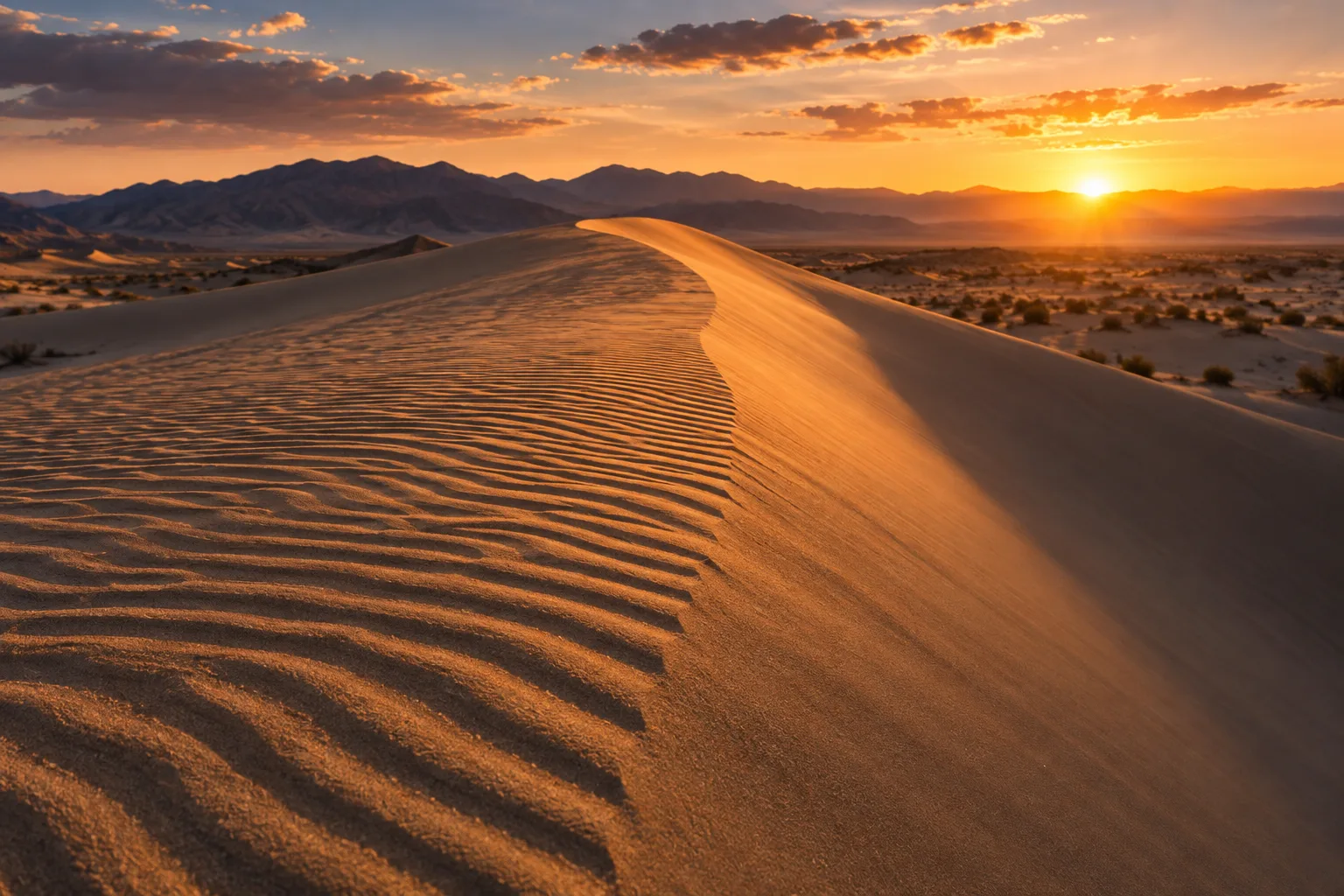
Start with a grain, not a mountain
A sand dune invites the wrong comparison. Seen from far away, it resembles a small mountain: a slope, a summit, perhaps a ridge disappearing into the distance. But a dune is assembled from loose grains. Wind can remove material from one place and deposit it in another, so the shape is maintained through processes very different from those holding a rocky peak together.
The National Park Service describes many dunes as having a gentler slope facing the wind and a steeper sheltered side. That common profile provides a starting point for reading the landscape. It is not a universal stencil. Wind direction, available sediment, plants, and the surrounding terrain all influence what eventually takes shape.
At the scale of individual grains, one important movement is saltation: small hops along the surface. The Sleeping Bear Dunes explanation emphasizes this bouncing transport. A photograph of a smooth dune can hide that busy near-ground traffic, just as a distant view of a crowd hides the steps of individual people.
Even the word sand needs care. It describes grain size rather than one compulsory mineral. White Sands National Park provides a striking example: its pale dunes consist of gypsum sand. The color is part of a particular material history, not evidence that every dune is made of the same substance. Before explaining how a hill moves, it helps to ask what its grains are and how they arrived.
All 3 chapters
Sources & further reading
Checked . Explanation and commentary are original; factual claims draw on these primary sources.