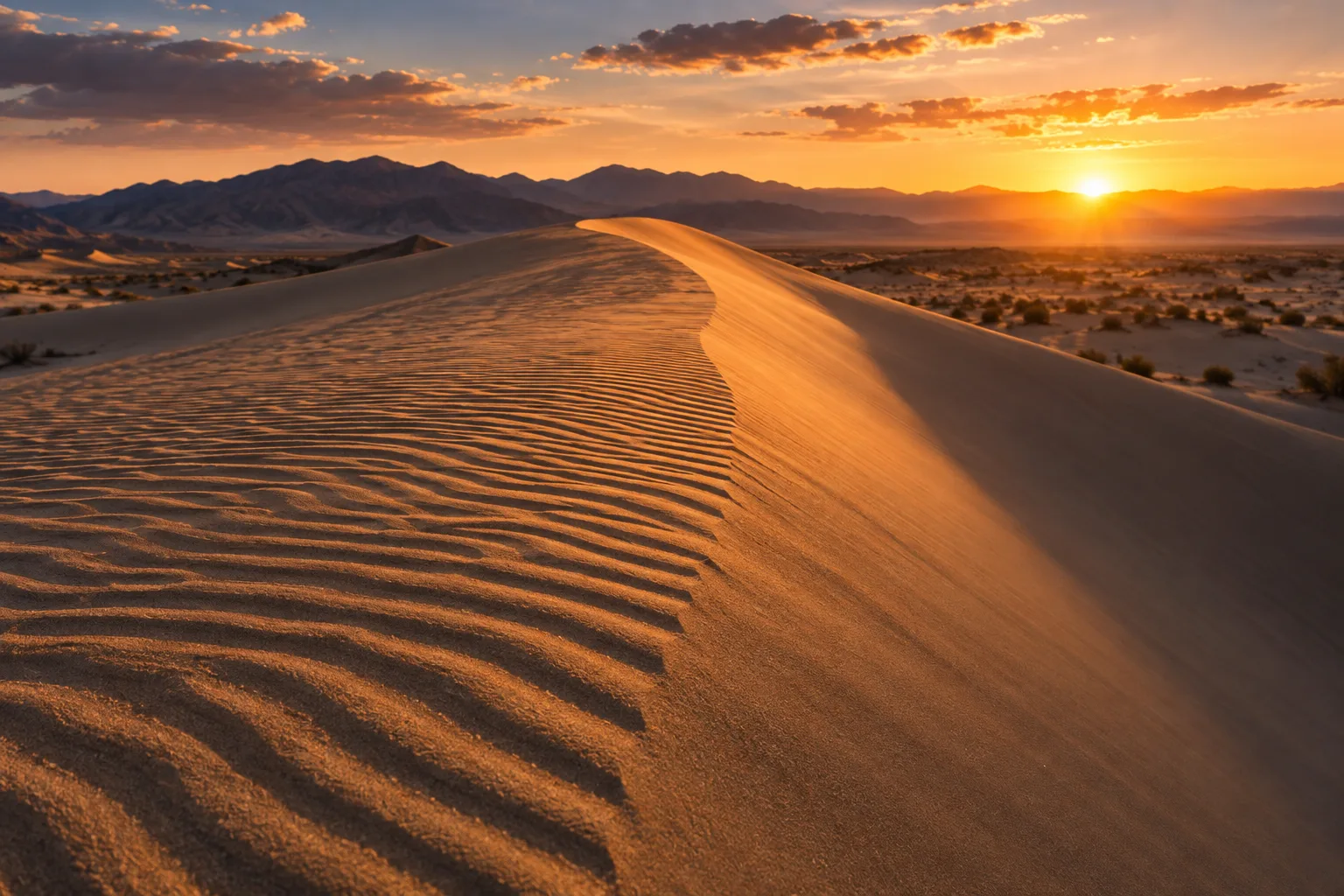
The landscape gives the wind something to work with
Wind does not manufacture an unlimited supply of suitable grains wherever it blows. NPS explains that other processes, including rivers, waves, and glaciers, can supply sediment that wind later transports. Dunes therefore belong to a larger landscape. Looking only at the crest can miss the sources that make the crest possible.
Colorado’s Great Sand Dunes offers a useful example of that connection. Water carried sediment into the surrounding valley, and wind moved available sand toward the mountain front. Seasonal creeks also transport sand around the edges of the dunefield, returning material toward the valley floor where wind can move it again. The system includes water even though its most recognizable feature looks dry.
Plants introduce another influence. Vegetation can slow the movement of sand and help hold parts of a dune in place. A shrub collecting sand around itself creates a different situation from an open surface where grains move with fewer obstacles. The plant is part of the process, rather than merely decoration added after the dune is finished.
This is why a useful explanation usually needs several observations together. A curved ridge may suggest a particular dune form, but nearby plants and the history of wind directions help explain it. The shape is an outcome. Reading backward from that outcome is possible, provided we do not pretend that one photograph supplies every missing detail about the setting.
All 3 chapters
Sources & further reading
Checked . Explanation and commentary are original; factual claims draw on these primary sources.