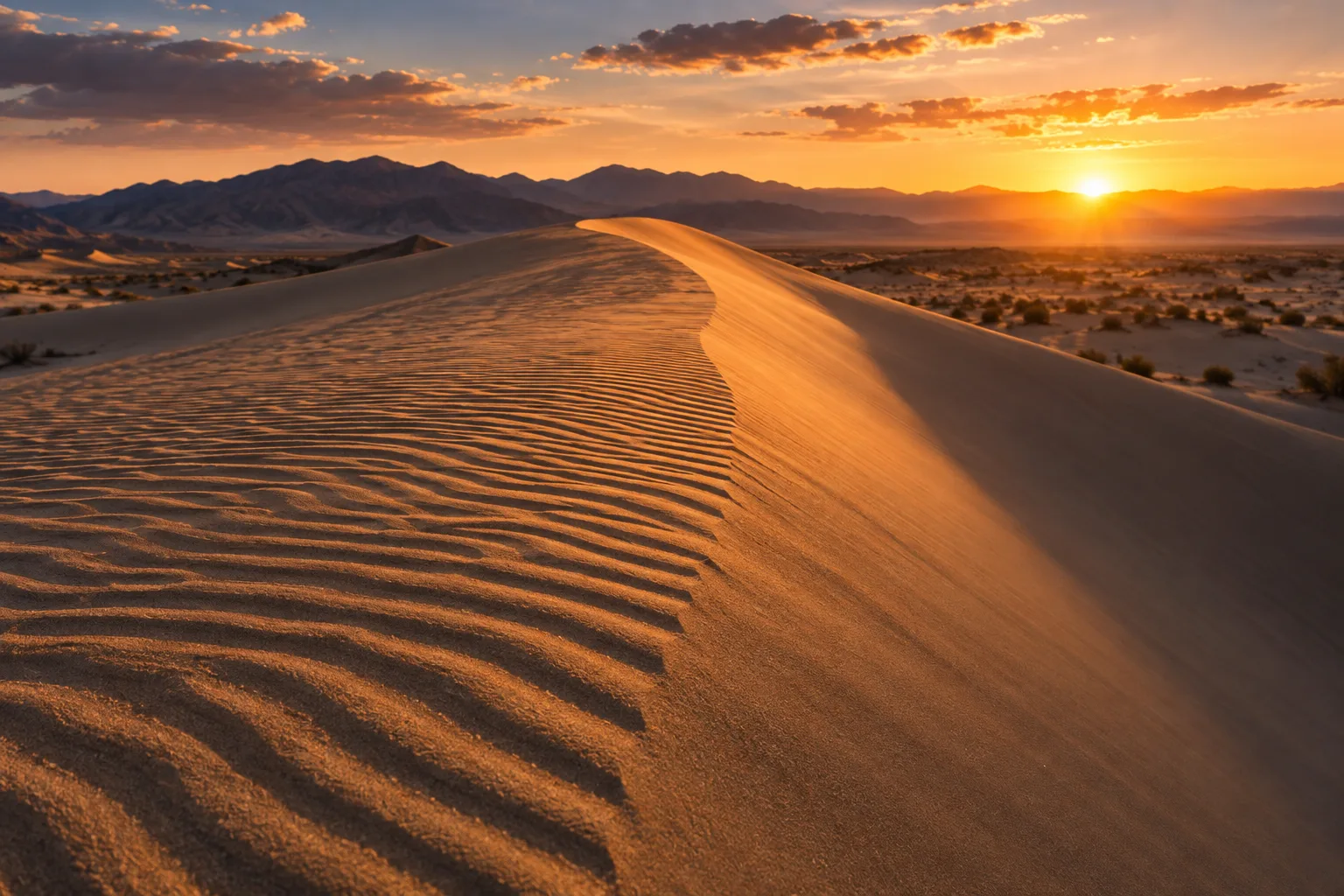
A familiar silhouette can conceal change
The NPS account of Great Sand Dunes compares broad views taken long apart and notes how recognizable the large forms remain. It also describes measurements showing smaller ridges moving across those forms. There is no contradiction: the scale of the feature being compared changes what the observer can detect.
Think of a patterned bedspread being smoothed. Small folds can shift while the overall covered shape of the bed remains much the same. This is only an analogy for scale, not a physical model of a dune. It helps explain why a stable outline cannot prove that every grain underneath it stayed where it was.
Dune categories are also clues to a changing environment. Star dunes have several radiating ridges and develop with winds from multiple directions. Parabolic dunes can have plant-anchored arms and an advancing central nose. These examples show how a form records the interaction of forces and resistance, rather than a single momentary gust.
The satisfying answer to how a hill of loose sand persists is that persistence need not mean stillness. Material can circulate, smaller features can migrate, and the broad form can remain recognizable. Next time a dune looks perfectly smooth, try changing the scale of the question: what happened to this grain, this ripple, this ridge, and the whole field? Each can have a different answer without any of them being wrong.
All 3 chapters
Sources & further reading
Checked . Explanation and commentary are original; factual claims draw on these primary sources.