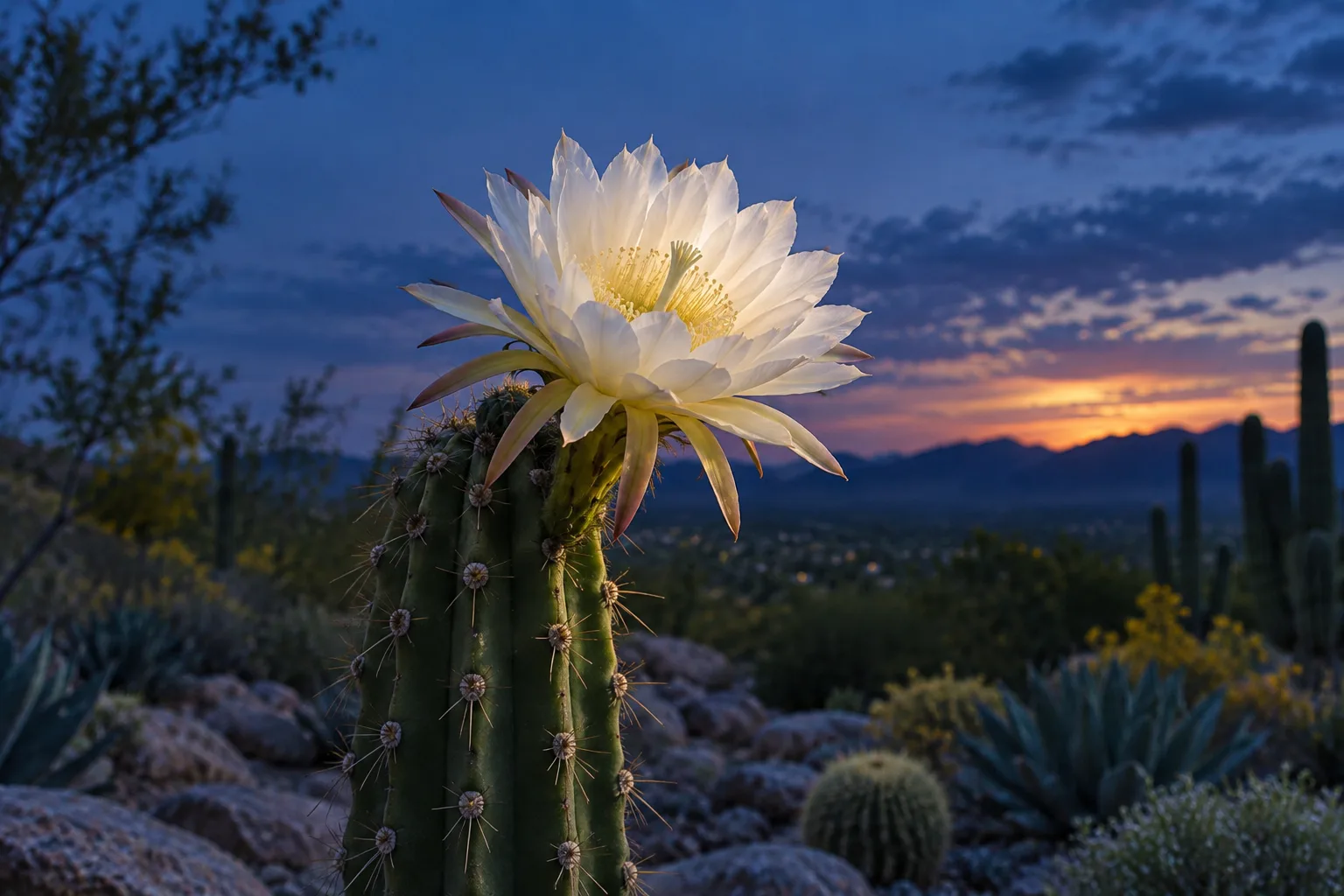
A bloom after closing time
If you imagine a garden only in daylight, you have already decided when its interesting activity happens. Try changing the scene: a pale flower against a darkening sky, with no bright sun to announce that it is open. The image is an invitation to ask a better question. Who might be visiting when the human observer has gone indoors? In the Sonoran Desert, bats can be part of the answer.
The National Park Service describes saguaro flowers opening at night and closing the following day. They receive visits from birds, insects, and bats. That short opening window helps explain why timing belongs in a plant's story. A flower is not just a permanent ornament. It offers an opportunity that different animals can encounter at different hours.
At Organ Pipe Cactus National Monument, the Park Service describes lesser long-nosed bats following the flowering season of columnar cacti northward. Their journey connects food availability across places. It is tempting to turn that into a picture of every garden waiting for the same visitor, but that would erase the geography and the species involved. This is a particular desert relationship. Its broader lesson is a question we can carry elsewhere: which visitors match the place, the season, and the hour? The answer begins with looking more closely, not with assuming that every winged shape has the same job.
Sources & further reading
Checked . Explanation and commentary are original; factual claims draw on these primary sources.