The meal leaves a trace
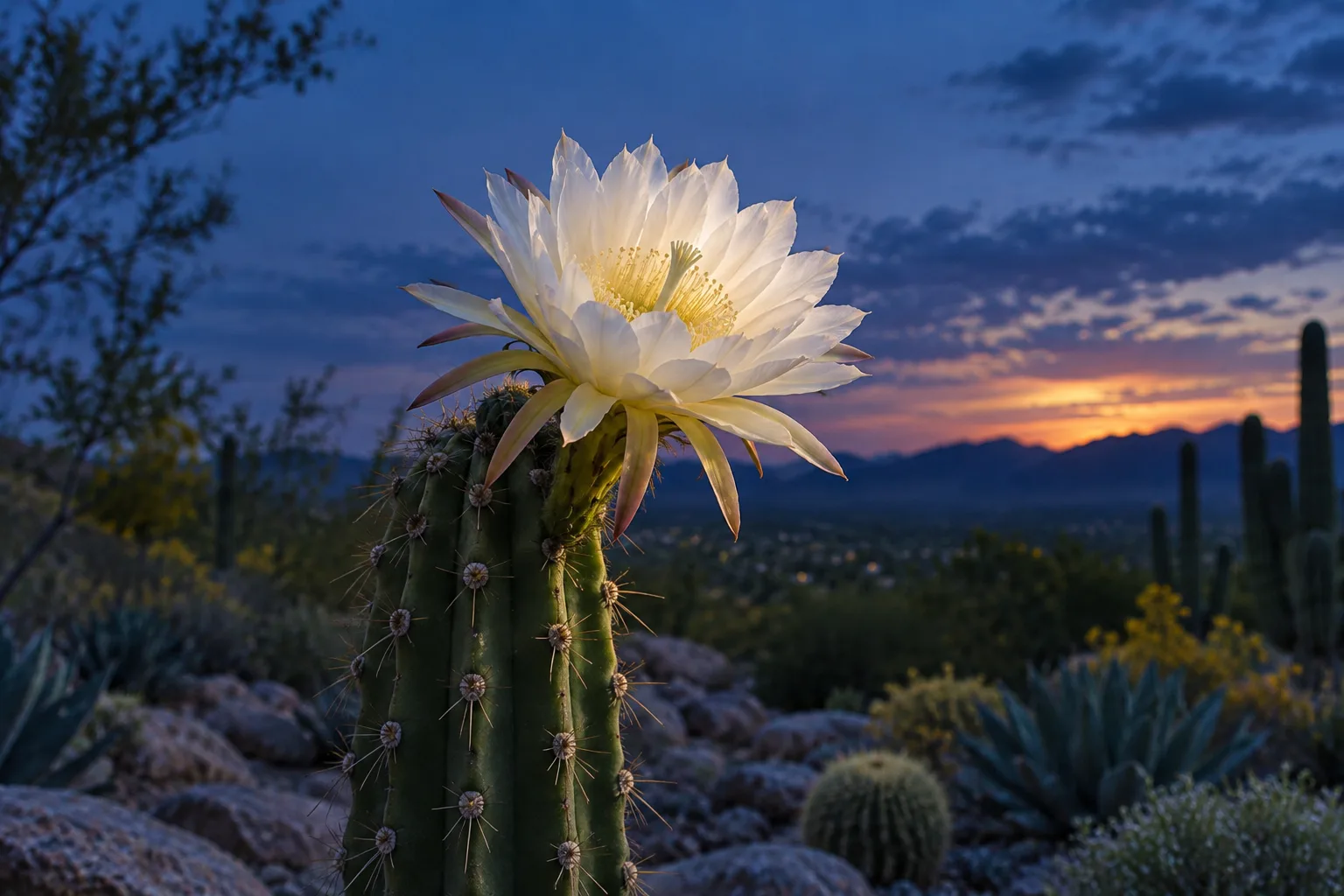
In the Park Service's account, a nectar-feeding bat reaches into a cactus flower with its muzzle and tongue. Pollen gathers on its head. When it visits another flower, some of that material can travel with it. A meal and a plant's reproduction become connected through the animal's movement. The bat does not have to intend to help the flower for that transfer to matter.
Think of this as a sequence rather than a slogan about a helpful animal: arrival, contact, departure, another contact. Each step makes the relationship easier to picture. It also shows why a photograph of a bat near a flower would be only one moment in the process. The movement between flowers is central to the explanation. The Park Service describes long muzzles and tongues in nectar-feeding bats at Saguaro, features that help them reach their food.
Other bats connect with plants and animals in different ways. The Park Service lists insect consumption and seed dispersal among the benefits of bats, alongside pollination. Those roles are not interchangeable. Moving a seed is different from moving pollen, and catching an insect is different from either. Imagine replacing the word bat in a nature caption with a description of what the animal is doing. The caption would immediately become more informative. Diet and behavior tell us something that a dramatic silhouette alone cannot.
Sources & further reading
Checked . Explanation and commentary are original; factual claims draw on these primary sources.