A station without a name
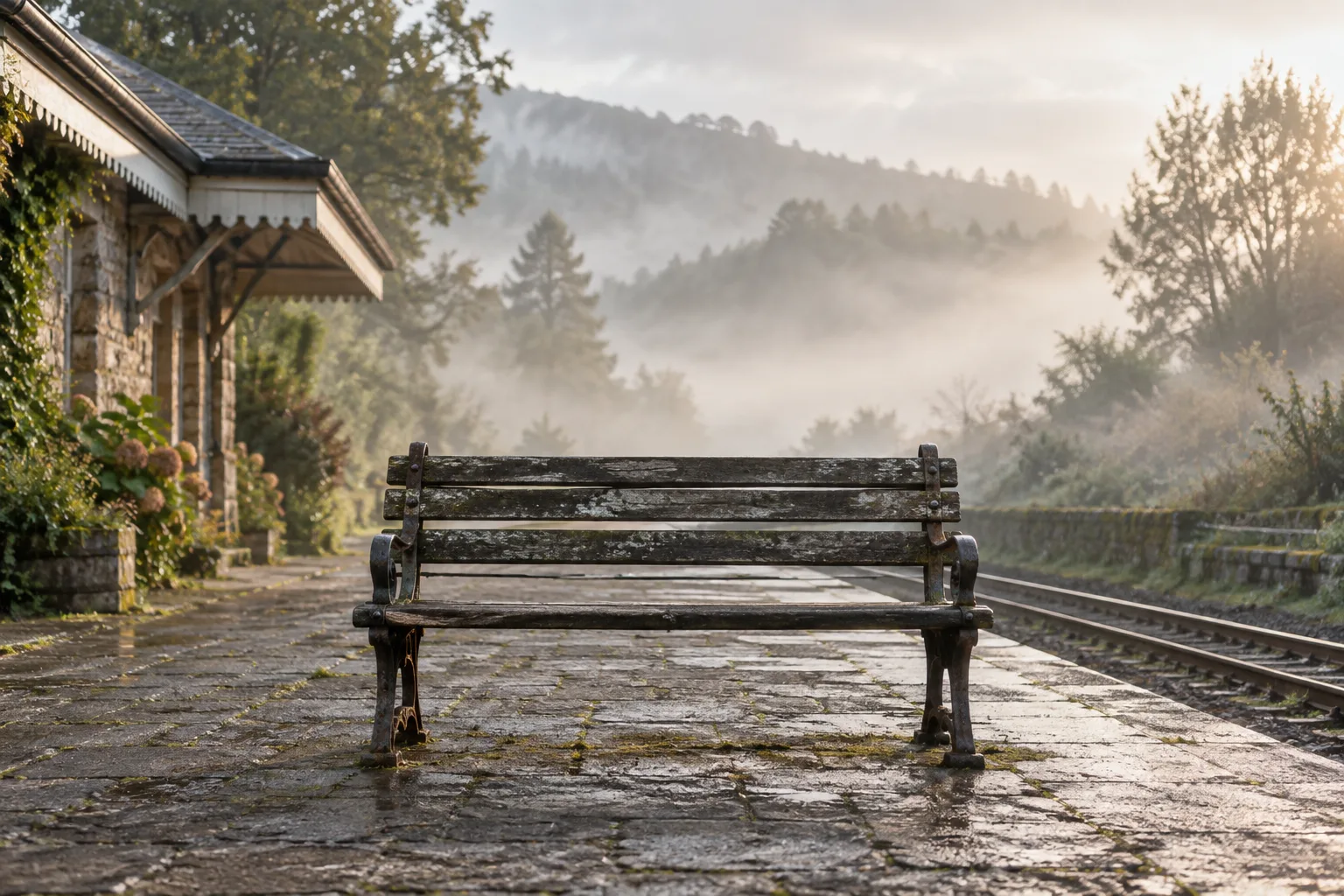
The photograph arrived inside a box of donated railway timetables. It showed a platform, a bench, and the lower corner of a station canopy. Someone had carefully cut away the sign above the bench. On the back, in pencil, were the words last morning before everything changed. Nora, who was assembling the village hall's history display, could not resist a place with its name missing.
She spread old maps across the table and checked the stations along the closed branch line. None matched. One had the wrong roof supports; another had never possessed a covered platform. The bench was the most distinctive feature: one end curved upward, while the other had a straight replacement arm. Nora pinned a copy beside the hall door and invited suggestions.
By lunchtime, five people had confidently named five different towns. An elderly visitor said the picture looked like the station where she had met her husband, then admitted that every station in her memory looked a little like that one. Nora began to suspect that the photograph was collecting stories more effectively than it was yielding an answer.
At closing time, the hall's caretaker, Ben, stopped beneath the copy. He did not look at the roof or the missing sign. He pointed at the straight bench arm. His father had repaired something just like it, he said, using a piece of wood from their kitchen door. But his father had never worked for the railway.