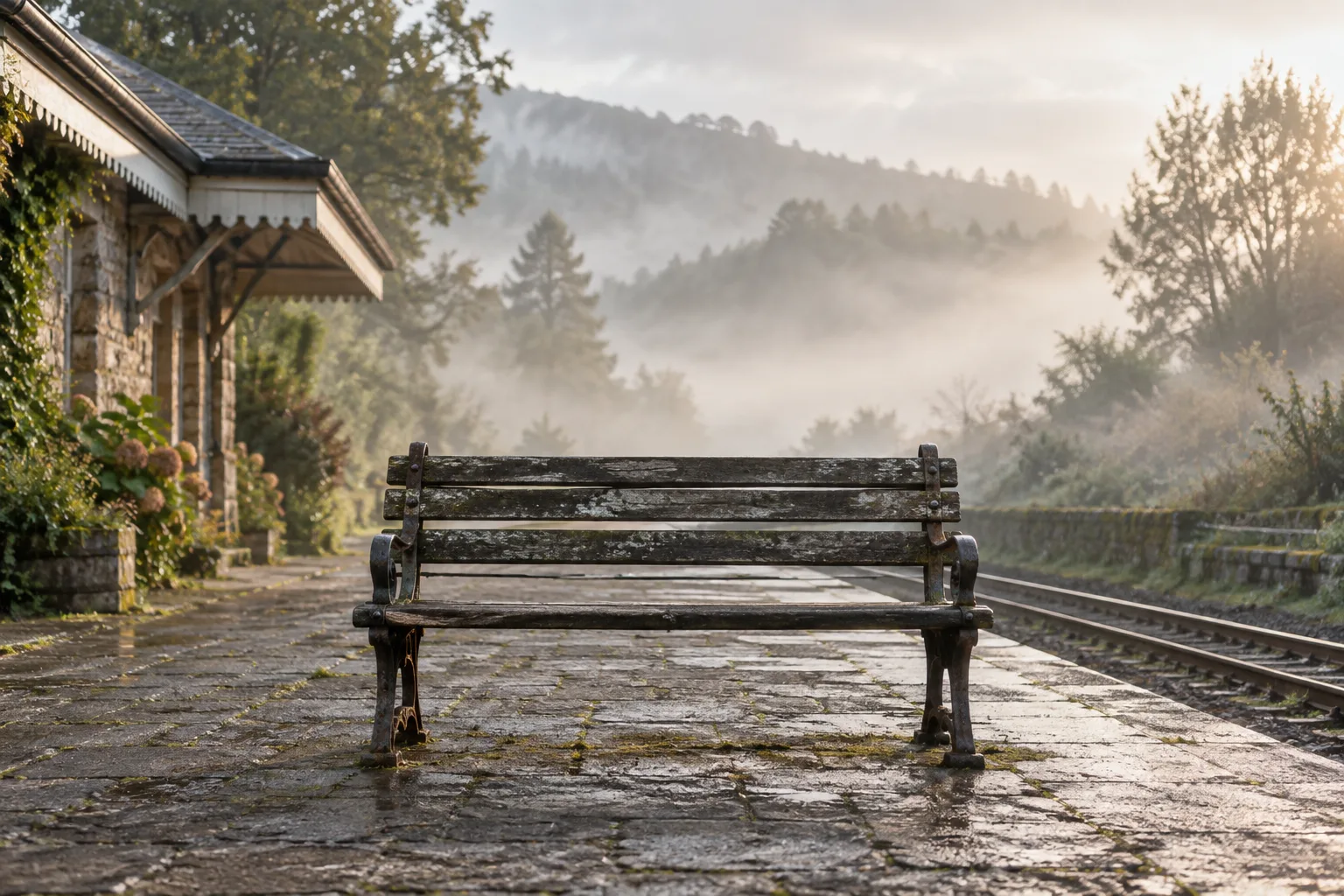
The wrong kind of platform
Ben brought in a smaller photograph the next morning. It showed his father standing beside the same repaired bench, surrounded by people holding paintbrushes. Behind them was a brick wall with three tall windows. Nora recognized those windows immediately. They belonged to the village hall, though the room in front of them had since been divided into storage cupboards.
The supposed station platform had been a stage set. Once Nora considered that possibility, the clues changed their meaning. The shadow beneath the platform looked too shallow for a track bed. The roof support stopped at an awkward edge that the photographer had mostly avoided. Even the gravel beside the bench could have been scattered over boards.
They searched the hall's old booking ledger and found a week reserved for a play called The Last Train Home. A faded program listed Ben's father under scenery and a woman named Ruth Calder as stage manager. Ruth still lived above the bakery. When Nora showed her the image, she recognized the set before Nora had finished asking.
Ruth said the photograph had been taken the morning after the final performance, before the scenery came down. The cropped sign had carried a fictional station name. The person who trimmed the print wanted it to look like a real place, a small joke for a cast album. But Ruth grew quiet when she read the pencil note. The words referred to something beyond the end of the play.