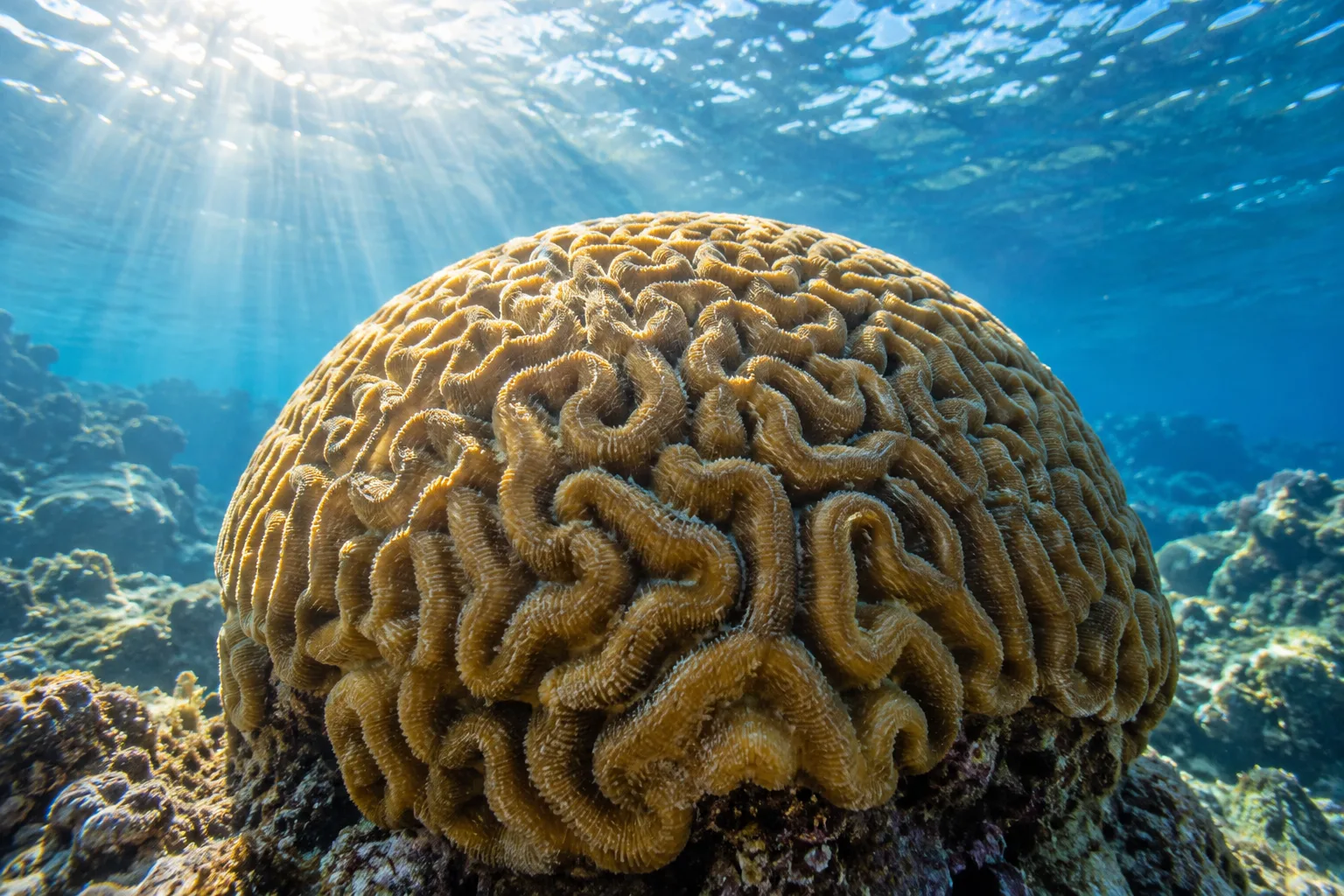
The animal inside the architecture
At first glance, a reef seems to invite the vocabulary of a garden. There are branching forms, rounded mounds, and crowded surfaces that appear to grow straight out of the seabed. But the familiar comparison conceals an important surprise: a coral polyp is an animal. The landscape becomes more interesting when you stop treating every stationary shape as a kind of underwater plant.
NOAA describes polyps as small, soft-bodied animals with tentacles used to capture food. In stony corals, the animal secretes a hard calcium carbonate skeleton. Living tissue and the structure beneath it are related, but they are not the same thing. Think of the distinction as the difference between a builder and the material being added to a building, while remembering that the builder remains part of the scene.
A reef's substantial framework can accumulate from these much smaller contributions. That change of scale is the first useful adjustment to make when looking at one: the broad underwater structure and the individual polyp answer different questions. One describes the landscape; the other helps explain how portions of that landscape are made.
It also changes the question you bring to a photograph. Instead of asking only what shape the coral resembles, ask which part is living tissue and what processes support it. The next part of the story takes place at a smaller scale still, within a partnership that helps many reef-building corals obtain energy.
All 3 chapters
Sources & further reading
Checked . Explanation and commentary are original; factual claims draw on these primary sources.