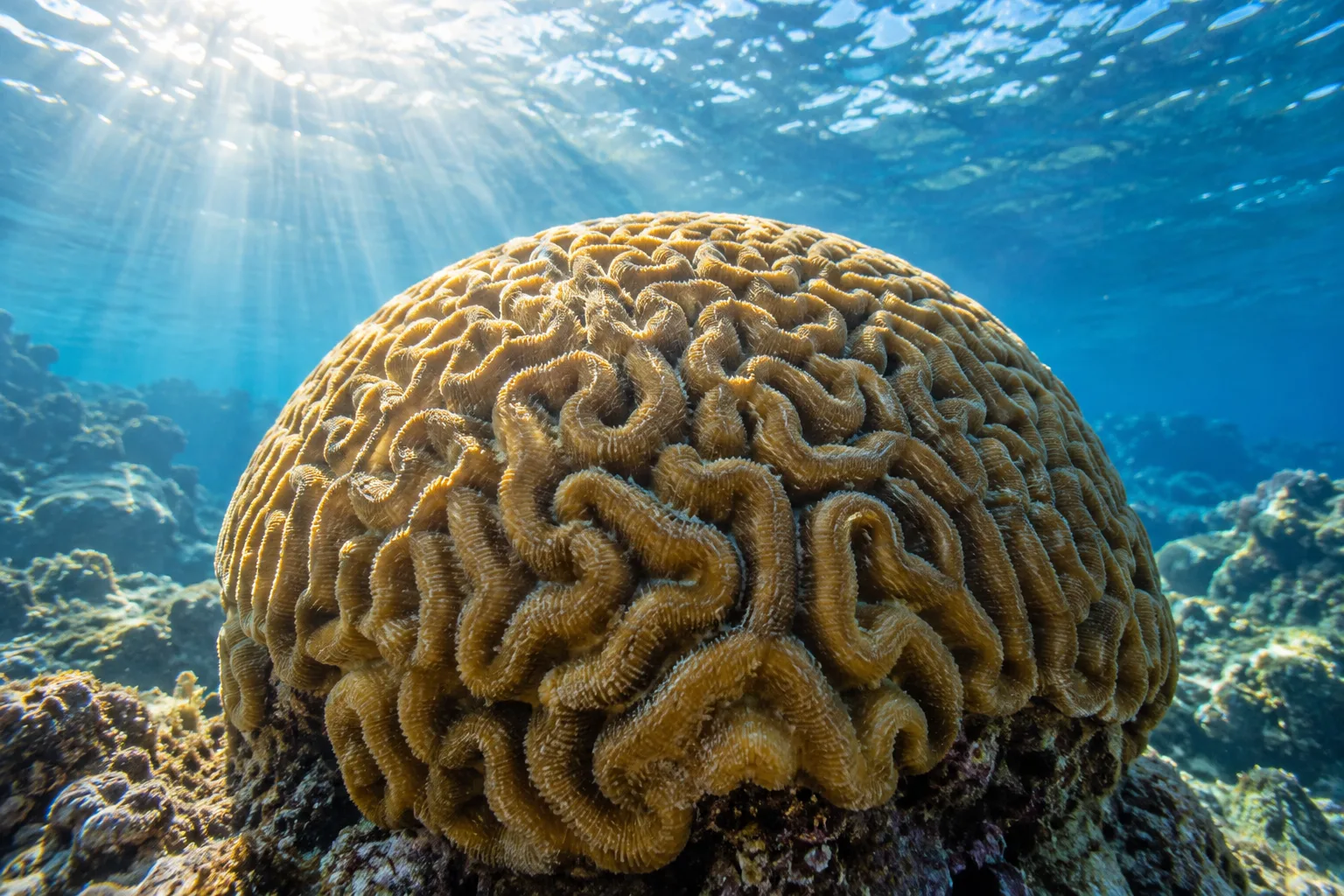
A partnership that makes light matter
Many reef-building corals contain microscopic algae within their tissues. NOAA calls this a mutualistic relationship because both partners benefit. The coral provides a protected setting and resources, while the algae use sunlight in photosynthesis and share products of that process. A coral is still an animal; hosting a photosynthetic partner does not turn it into a plant.
This helps explain why light conditions matter so much for these reefs. The connection runs from sunlight through the algae to the host, rather than from sunlight directly into a stone skeleton. Clear water can allow that light to reach the partnership. It is a good example of how an apparently simple feature of a habitat can matter through a chain of relationships.
That chain also makes a familiar photograph harder to interpret than it first appears. A beautiful bright scene is not a complete assessment of reef condition. NOAA Fisheries describes additional pressures on shallow reefs, including sediment and pollutants carried from land, as well as physical damage from activities such as anchoring. Light is one part of a larger setting.
The useful lesson is to keep several scales in view at once. An individual animal, its microscopic partners, the hard structure, and the surrounding habitat are connected. None can stand in for all the others. With those distinctions established, a change in coral color becomes more than a visual surprise: it becomes a clue that needs careful interpretation.
All 3 chapters
Sources & further reading
Checked . Explanation and commentary are original; factual claims draw on these primary sources.