Shelter is only part of the story
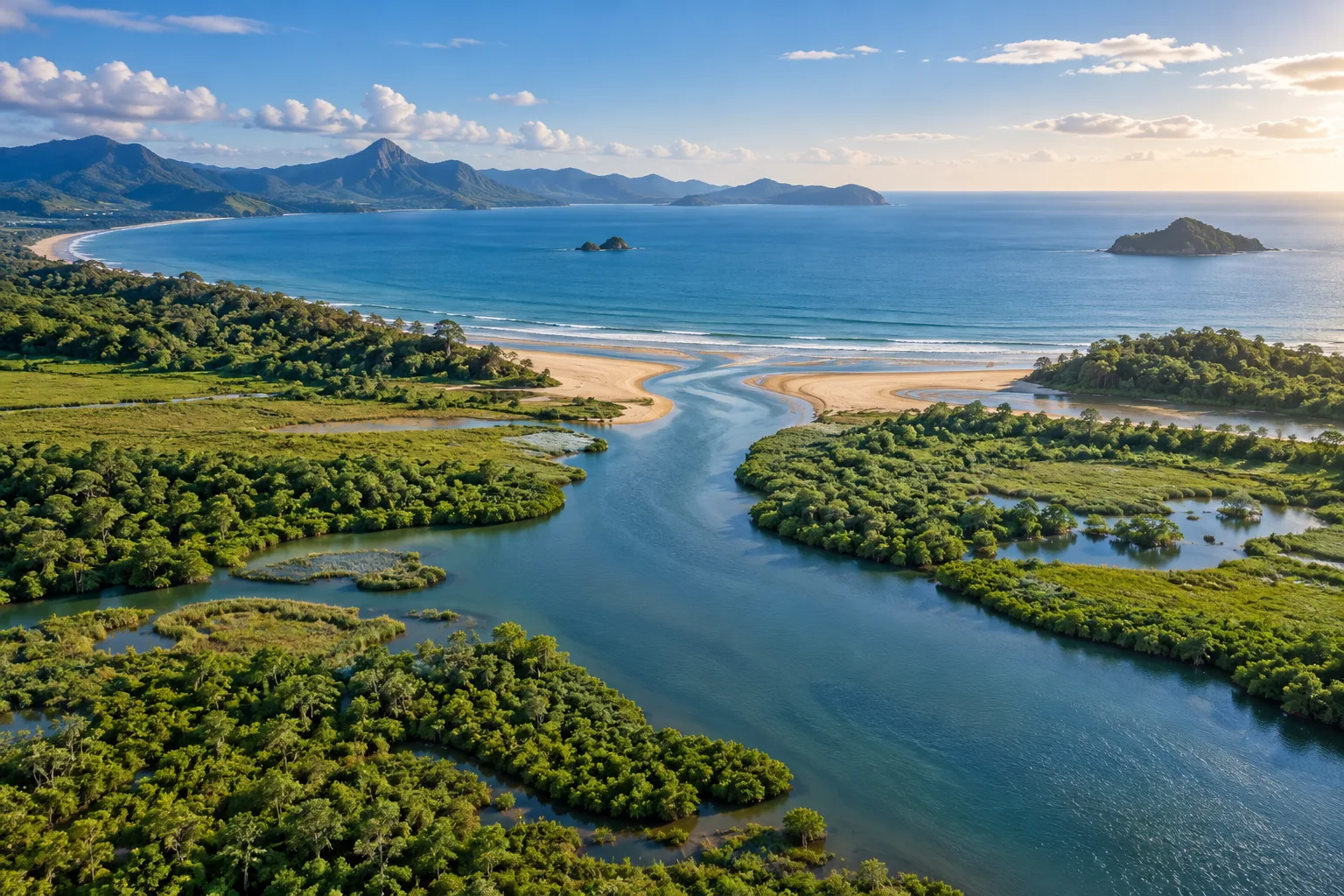
Estuaries support animals that use them in different ways. Some remain for much of their lives, while others arrive for a particular stage or season. NOAA describes nursery areas for fish and shellfish, feeding and nesting habitat, and stopovers for migrating birds. The word nursery captures an important function without meaning that only young animals belong there.
Sheltered channels and wetlands are therefore connected to life beyond their immediate edges. An animal can depend on one habitat early in life and another later. Protecting only the place where an adult is eventually seen may miss an earlier part of the same life cycle. This is a way of thinking about connections, rather than a claim that every species follows one identical route.
Water also brings material from the surrounding watershed: the land that drains toward the estuary. Nutrients can support growth, but runoff may carry pollutants as well. NOAA explains how marsh grasses and surrounding soils can retain sediments and filter some substances. That service is valuable precisely because the estuary receives influences from a much larger area.
A filter is not a permission slip for unlimited waste. Material retained in a habitat does not make the habitat immune to contamination. The same system can be productive and under pressure. Looking upstream becomes part of understanding the shoreline, because an apparently distant activity can be connected to the water moving through a marsh.
All 3 chapters
Sources & further reading
Checked . Explanation and commentary are original; factual claims draw on these primary sources.