The circle is really a network
Some rainwater runs across the surface instead of entering the ground. Surface runoff can move toward streams, while groundwater can also discharge into streambeds and banks. USGS describes this groundwater contribution as an important source of sustained flow. A stream continuing after the rain stops is therefore not evidence that water has somehow stopped following the rules.
This is where a simple water-cycle circle can become limiting. It is useful for introducing familiar process names, but it can suggest a single orderly queue: every drop taking every step in the same sequence. USGS instead describes stores of water and flows between them. Different routes can operate at the same time, and water can remain in storage before moving again.
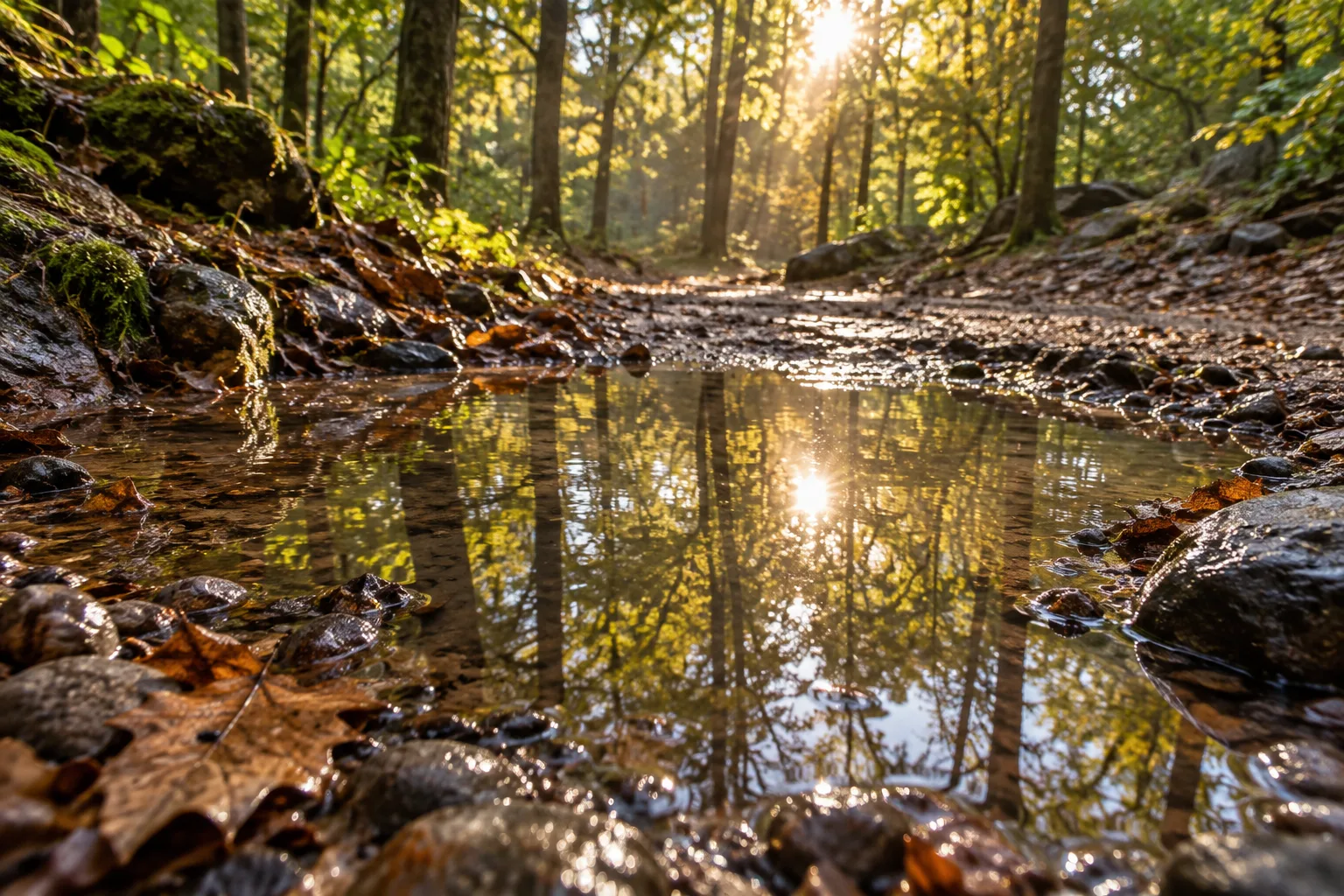
For the imagined puddle, the satisfying answer is deliberately plural. Evaporation could have transferred water to the air; infiltration could have moved it into the ground; drainage could have carried some away across the surface. The empty patch alone cannot tell you the share assigned to each route. A good explanation distinguishes possible mechanisms from quantities that were actually measured.
The next time a puddle fades, try looking beyond its outline. Notice the slope, the surface, the nearby vegetation, and where water could travel. Those observations will not provide a complete water budget, but they turn disappearance into a set of testable questions. The water's story continues after the small visible pool has gone.
All 3 chapters
Sources & further reading
Checked . Explanation and commentary are original; factual claims draw on these primary sources.