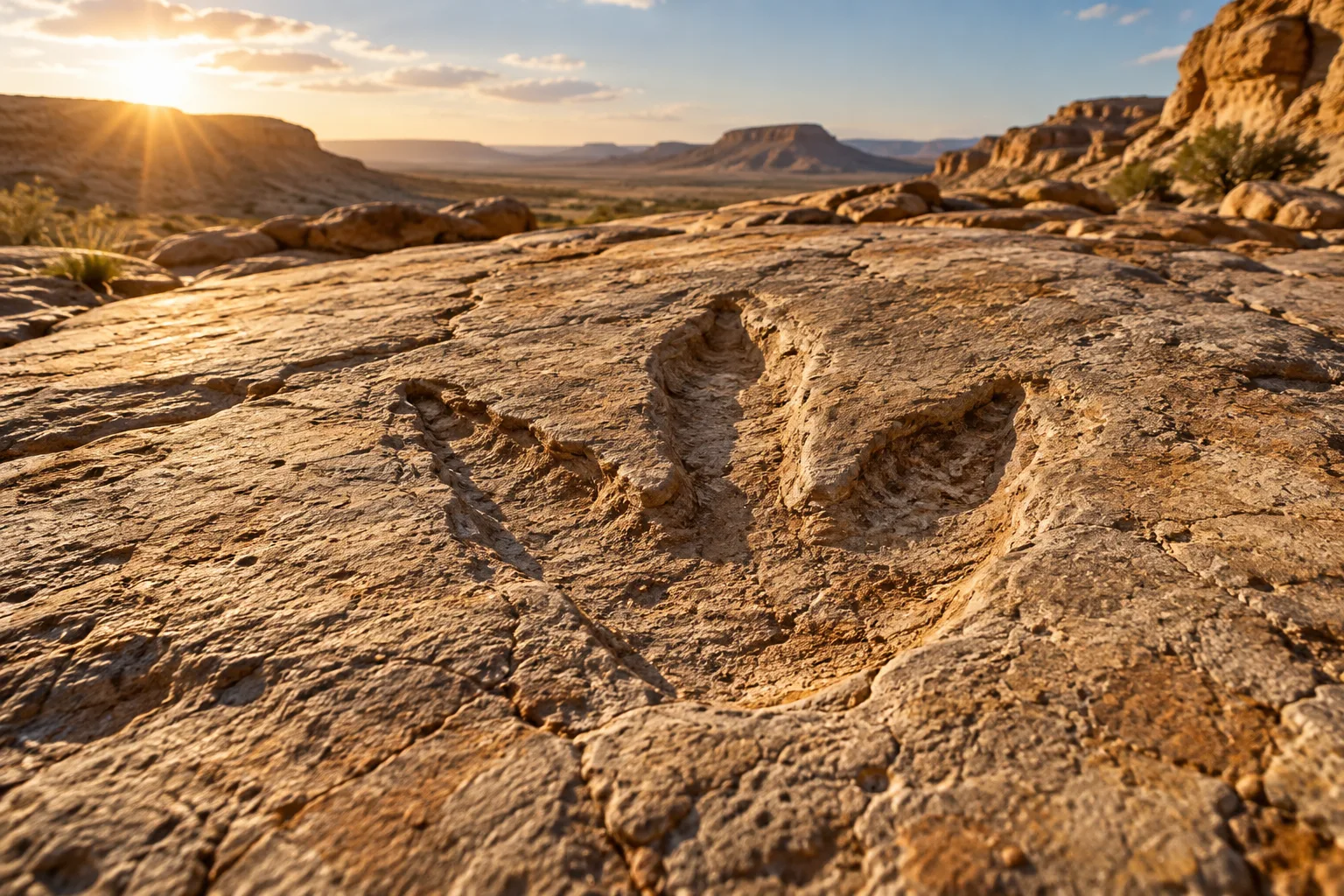
An animal can leave the scene and still leave evidence
Imagine two museum labels beside one another. The first identifies a tooth; the second identifies a footprint preserved in rock. Both belong in a fossil display, but they answer different kinds of questions. The tooth is part of an animal. The footprint records something an animal did. That distinction opens a much larger view of what the fossil record can contain.
The National Park Service groups evidence into body fossils and trace fossils. Bones, shells, and wood are familiar body remains. Tracks, burrows, and other traces preserve activity. A creature can make a footprint while alive and continue on its way. Finding the preserved impression does not require finding its skeleton beside it, or assuming that it died immediately after making the mark.
NPS explains that traces can provide clues about behavior and the environment in which an activity occurred. They are usually studied in the material where the activity took place, which makes their setting especially informative. A track is more than an attractive outline: its relationship to the surrounding surface is part of the evidence.
It is tempting to jump directly from a striking shape to an elaborate scene. A more useful first step is smaller: identify what is actually preserved. The tooth and the footprint can complement one another without telling the same story. Before deciding what either one means, however, there is another distinction to make between an original object and the ways its shape can survive.
All 3 chapters
Sources & further reading
Checked . Explanation and commentary are original; factual claims draw on these primary sources.