The gaps are part of the story
The path from a living organism to a fossil is not a neutral recording process. Hard parts such as teeth and shells generally withstand decay and damage better than delicate tissues. NPS describes soft-part preservation as comparatively rare and dependent on unusual circumstances. A collection rich in hard remains therefore cannot be treated as a complete inventory of everything that once lived.
Taphonomy is the study of what happens to remains between death and fossil preservation. Water can move them, scavengers can disturb them, and exposed material can break apart. Burial can protect some remains, while later physical and chemical changes can alter them further. A specimen's condition may tell a story about that journey as well as about the original organism.
That gives an incomplete fossil a different kind of interest. Missing pieces are not necessarily evidence that an animal lacked those parts in life. Scattered bones are not automatically a perfect map of where an animal stood. Those are interpretive questions that require the surrounding evidence and an understanding of preservation, rather than a dramatic explanation based on one fragment.
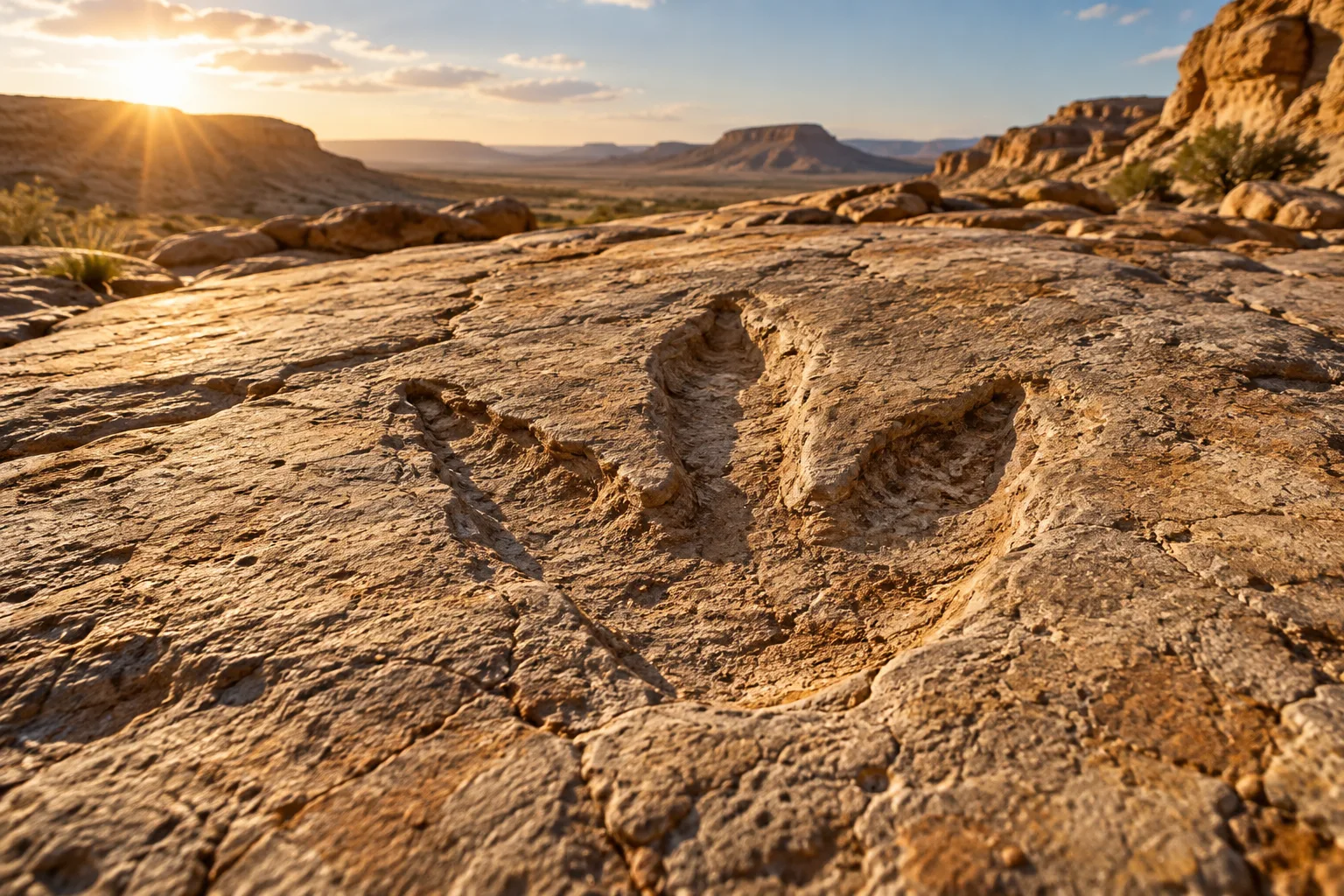
Return to the tooth and footprint in the imagined display. One offers a durable piece of anatomy; the other records an action at a surface. Together they illustrate why paleontology can work with much more than complete skeletons. The most satisfying conclusion is not that a fossil tells us everything, but that different kinds of evidence let us ask different, carefully bounded questions about the past.
All 3 chapters
Sources & further reading
Checked . Explanation and commentary are original; factual claims draw on these primary sources.