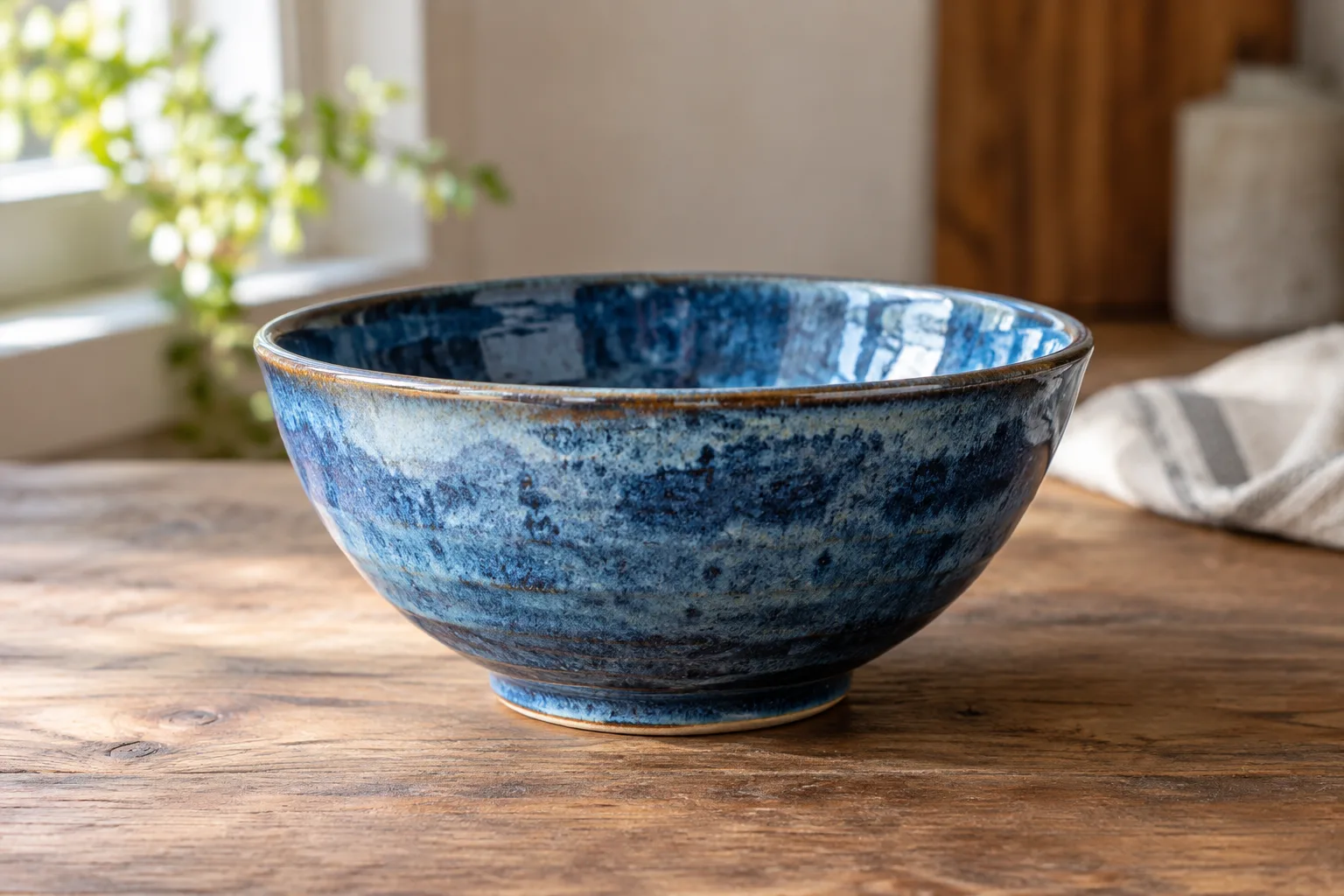
Two bowls, two different futures
Imagine two plain bowls sitting side by side on a workbench. Both hold their shape. Both might look finished to someone passing the doorway. Yet one could be returned to a workable clay mixture, while the other has crossed a material boundary. Their appearance alone does not tell the whole story of how they reached the table.
The Victoria and Albert Museum explains that unfired clay can be broken up, soaked, and reclaimed. Firing makes a permanent chemical change: clay becomes ceramic. Dryness and firing are therefore different conditions, even though each can leave an object that feels firm. Adding water is not a way to reverse a completed ceramic firing.
That distinction changes how a maker thinks about mistakes. Before firing, an unwanted form may still be a source of material for another attempt. After firing, preserving or repurposing the object is a different kind of decision. Crushing a pot into fragments does not undo its history, any more than rearranging the fragments recreates the original soft lump.
This comparison is an imagined workshop scene, not an account of an experiment on a museum object. Its purpose is to make a hidden transition easier to notice. The interesting question is not simply whether the bowl is hard. It is which process made it hard, and which possibilities remain available afterward.
All 3 chapters
Sources & further reading
Checked . Explanation and commentary are original; factual claims draw on these primary sources.