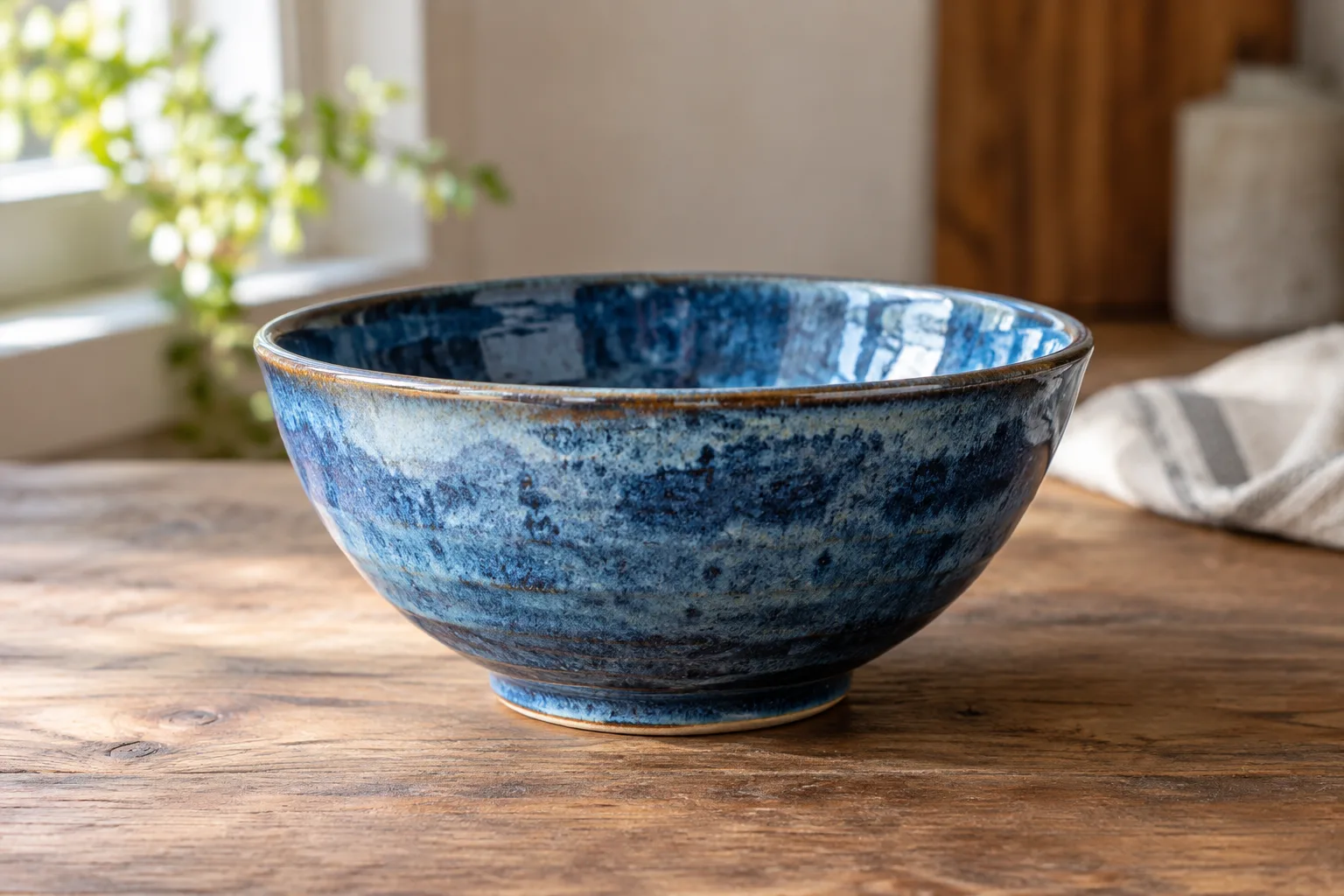
The surface is a record of choices
Now picture that bowl with a blue surface. It is tempting to treat color as a final coat, something added after the serious business of making the object. Ceramic production offers a more connected picture. The material beneath the surface, the treatment applied to it, and the conditions during firing all belong to the object’s making.
The V&A’s account of Richard Batterham describes a potter who prepared his own clay and worked through the process from material to firing. He cut, combed, and incised surfaces before glazing them. He also tested glaze recipes for different clay bodies and positions within his kiln. Those details show decisions occurring throughout production, rather than artistry arriving only at the end.
There is no single forming method behind every bowl. Getty’s discussion of pottery across cultures describes clay being molded, coiled, or shaped on wheels. A rounded vessel is therefore not proof that a wheel made it. The finished outline poses a question about technique; close observation and knowledge of the process help answer it.
For a reader looking at a familiar cup, the useful habit is to separate what is visible from what is inferred. You can observe a groove, a glossy patch, or a slightly irregular rim. Assigning each feature to a particular tool, maker, or firing needs further evidence. Curiosity becomes more precise when it keeps that distinction.
All 3 chapters
Sources & further reading
Checked . Explanation and commentary are original; factual claims draw on these primary sources.