Start with the plant
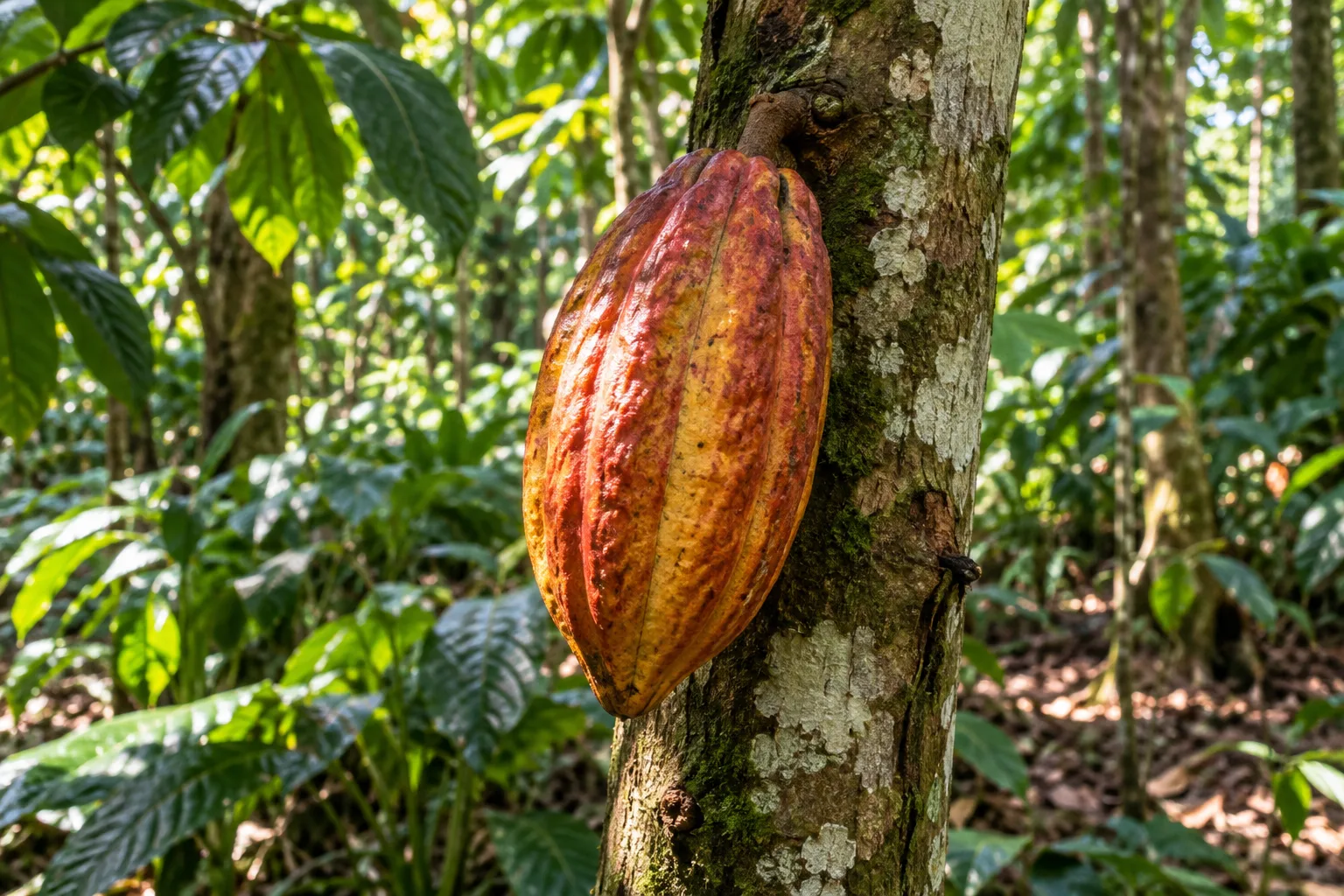
Place a wrapped chocolate bar beside a cacao pod and the relationship is not visually obvious. One is smooth, divided, and ready to eat; the other is a substantial fruit growing on a tropical tree. The distance between those appearances is a useful reminder that a familiar food can conceal both a biological origin and a great deal of human work.
Kew identifies Theobroma cacao as a tree associated with the wet tropics. Its flowers can emerge from the trunk and older branches, rather than only from the ends of small shoots. Inside the resulting fruit are seeds surrounded by pulp. Those seeds are the material commonly called cocoa beans, a food name that can obscure which part of the plant is being used.
Before a pod develops, pollination must occur. Smithsonian teaching resources use cacao as an example of a crop pollinated by flies. That detail broadens the familiar picture of pollination as something bees do to conspicuous garden flowers. Different flowers fit different visitors, and an inconspicuous insect can be part of the history of a conspicuous food.
At this point there is no finished chocolate hidden inside the tree. There is a fruit containing the raw material for further work. Keeping the parts distinct—flower, pod, pulp, seed—makes the rest of the journey easier to follow. It also avoids the misleading idea that manufacturing merely shapes a substance that already resembles a chocolate bar.
All 3 chapters
Sources & further reading
Checked . Explanation and commentary are original; factual claims draw on these primary sources.