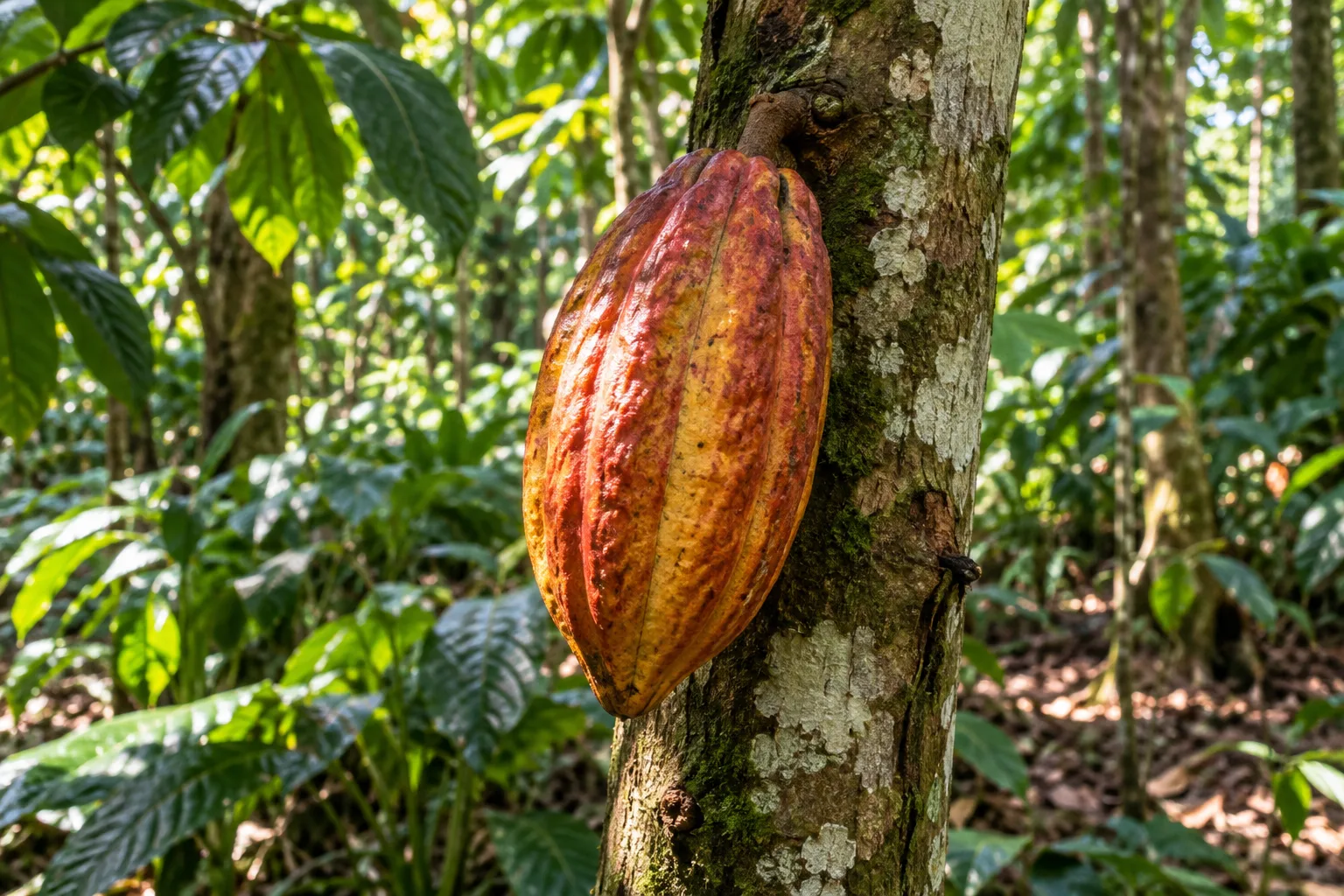
Several ingredients from one beginning
Further processing separates and transforms the material again. Winnowing removes shells from the inner pieces known as nibs. Grinding those nibs produces cocoa mass, while pressing can separate cocoa butter from the remaining cocoa material. The International Cocoa Organization’s processing overview distinguishes these stages rather than treating every intermediate product as one interchangeable brown ingredient.
Cocoa butter is the cocoa-derived fat. The word butter can invite a dairy association, but the name does not mean it comes from milk. A recipe may separately include milk ingredients, sugar, and other components. Recognizing the difference between an ingredient’s source and a recipe’s additions is more useful than relying on a familiar word alone.
The United States Botanic Garden presents cacao as a plant whose seeds lead to cocoa powder, butter, and chocolate. That small list captures the branching nature of the journey. There is no requirement that everything extracted from a pod end up in one identical product. Processing and formulation determine which properties are developed and how the resulting ingredients are combined.
The reward for tracing the route backward is a more precise view of an everyday treat. A bar connects plant reproduction, harvest decisions, microbial changes, drying, separation, and recipe choices. None of those facts tells you automatically which brand to prefer, and this is not a health claim. They explain why the finished object looks so unlike its beginning—and why the people working before the wrapper appears are part of its flavor story.
All 3 chapters
Sources & further reading
Checked . Explanation and commentary are original; factual claims draw on these primary sources.