Work that happens after the harvest
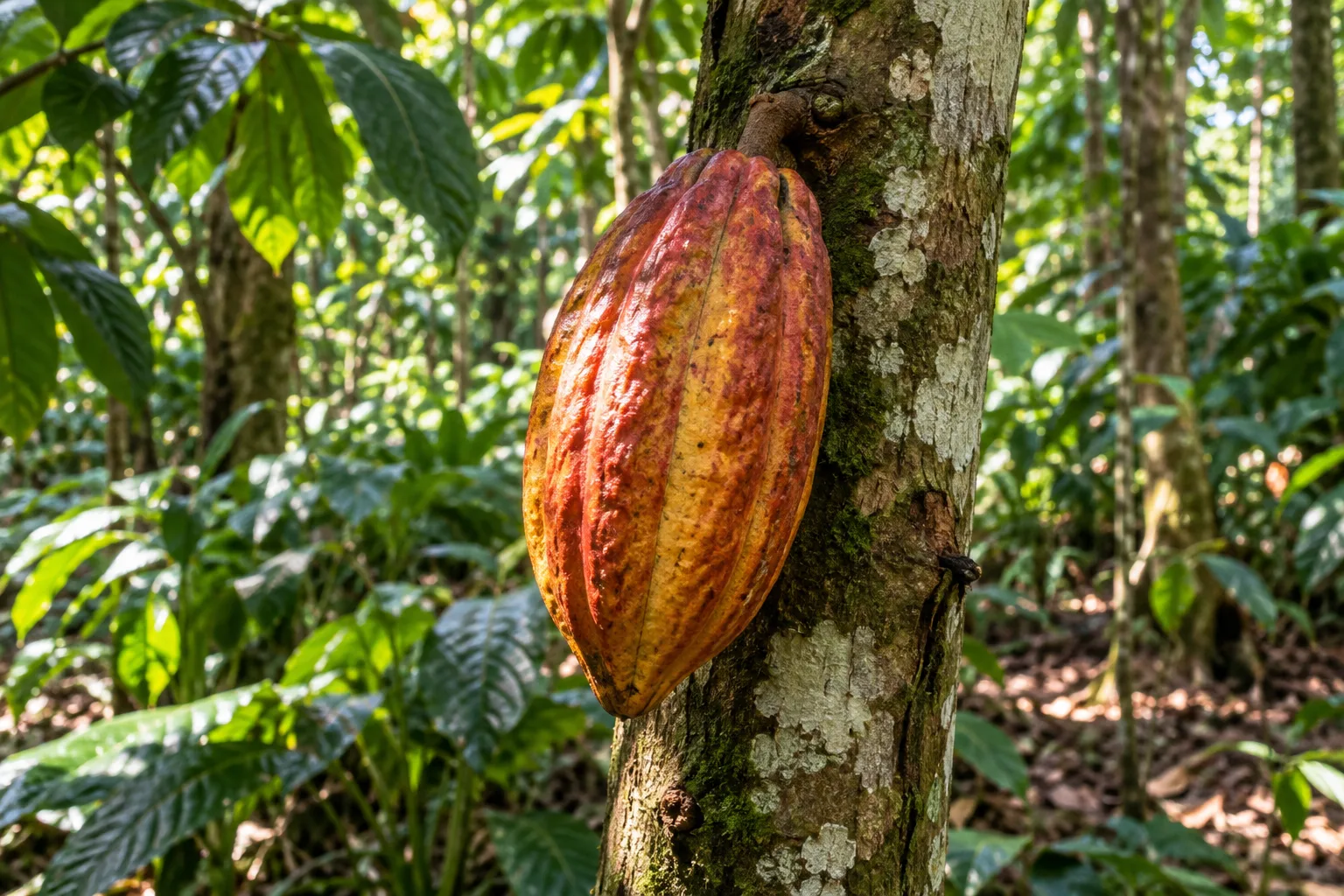
The International Cocoa Organization describes harvesting as the removal of ripe pods followed by extraction of the wet beans. That is the start of processing, not its conclusion. The fruit has protected its contents on the tree; opening it creates a new set of handling tasks that are essential to the material’s later quality.
Fermentation acts on the pulp-covered beans through microbial activity and associated chemical changes. Drying then reduces moisture before storage and delivery. These are distinct operations. Calling either one simply “letting the beans sit” hides the fact that conditions and timing matter, and that the grower’s work continues after the pod leaves the branch.
The organization emphasizes that flavor development involves both fermentation and later roasting. This makes a useful correction to the factory-centered picture of chocolate: the processor does not receive a neutral material whose history can be ignored. Earlier handling influences what later processing can achieve. The final flavor has a chain of contributors rather than one moment of creation.
For a reader comparing foods, the lesson is to ask what a process does before judging it by its name. Fermentation is not a synonym for drying, and drying is not the same as roasting. Each changes the material in a different way. Understanding that sequence gives the less visible stages their proper place without reducing an intricate craft to a universal recipe or an exact timetable.
All 3 chapters
Sources & further reading
Checked . Explanation and commentary are original; factual claims draw on these primary sources.